




First-time cat owners usually start with a litter box, food, and toys. It is only once the cat is home that the small, daily things turn out to be the hard part: whether the water bowl gets used, whether meals happen on time, why there is fur everywhere, whether an opened bag of kibble is going stale, and how to dry a cat properly after a bath.
You do not need to buy every piece of gear at once. What you do need first is a stable environment and a routine. Water, food, a litter box, rest, and places to hide are the resources a cat needs to feel safe, and food and water bowls should sit well away from the litter box so your cat can eat and drink in peace. Cat Friendly Homes also recommends offering fresh food and water daily, and placing everything to suit your cat's personality and your home.
Here are the five parts of daily care that come up most often for new owners: water, food, air, food storage, and drying.

AquaLux: one bowl of water is not a hydration plan
Whether a cat drinks depends on more than how much water is there. Freshness, bowl material, placement, and how the water moves all matter. Some cats want a quiet, undisturbed spot; others are far more interested in moving water.
A few simple places to start:
- Change the water daily and wash the bowl regularly.
- Choose a wide, shallow bowl so whiskers touch the rim less often.
- Keep the water area a reasonable distance from the litter box and the food.
- In a larger home or a multi-cat household, set up more than one water station.
- Watch for sudden increases or drops in how much your cat drinks.
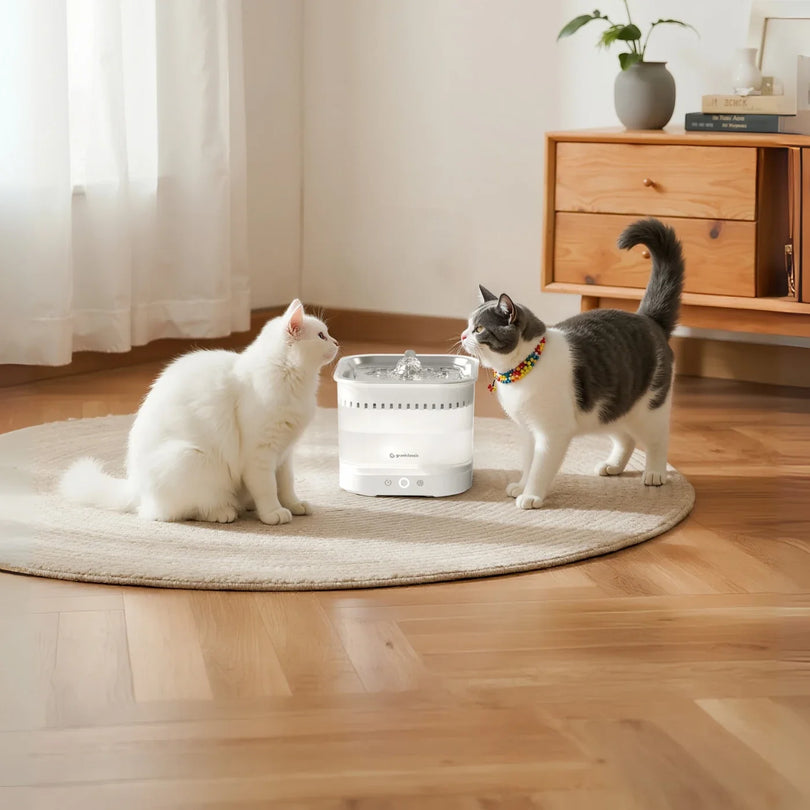
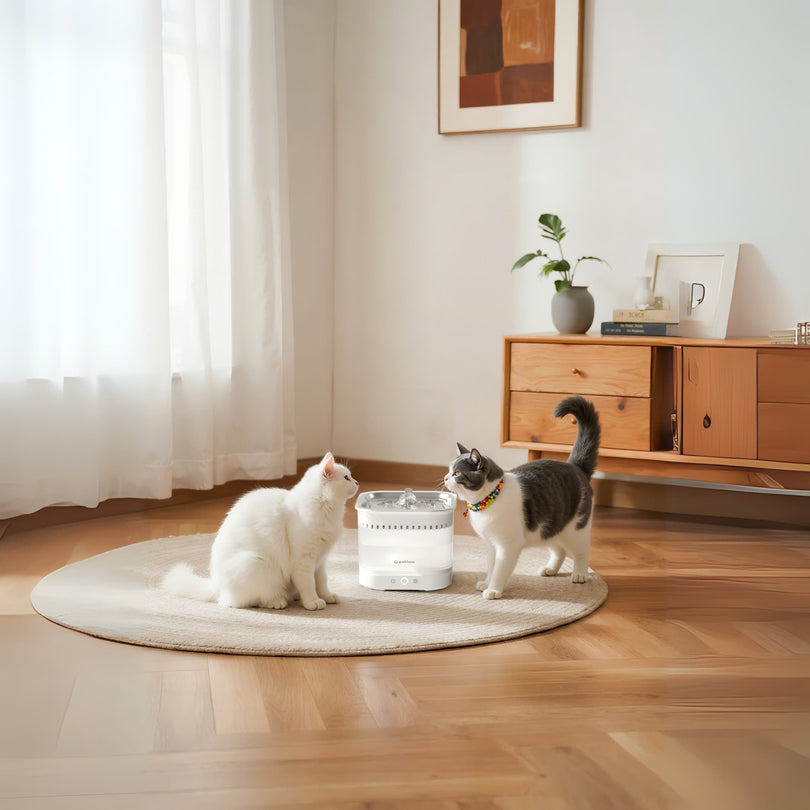
If still water does not interest your cat, try a fountain. The AquaLux Smart Ceramic Pet Fountain has a high-fired ceramic body, motion-activated flow, and filtration. It is less tied to an outlet for placement, and moving water can make a cat more willing to approach.
A fountain is not a pass on cleaning, though. The reservoir, spout, and filter still need regular washing or replacement so fur, kibble crumbs, and grime do not build up.

LuxNourish: set meals beat a bowl that is always full
New owners often fill the bowl and let the cat graze. Over time, free feeding makes it hard to know how much your cat actually ate in a day, and it can lead to overeating.
Set mealtimes and portions build a steadier routine and make changes in appetite easier to spot. Cornell's Feline Health Center recommends defined meal periods rather than unlimited food. Portions should follow your cat's age, weight, activity level, health, and the calorie content of the food. Cornell's guide to feeding your cat
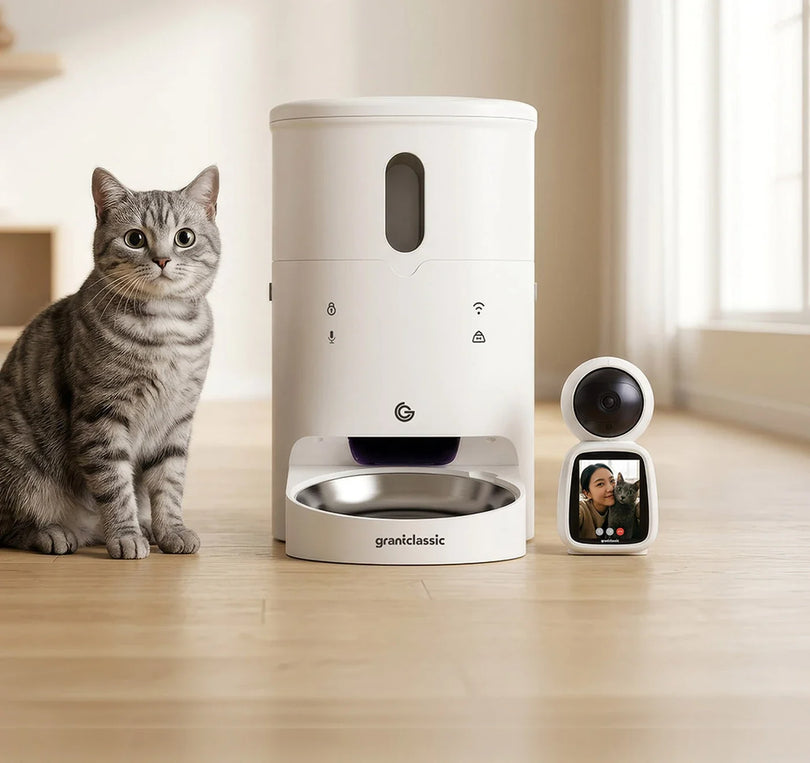
If you are out a lot or your hours move around, the LuxNourish Smart Pet Feeder lets you set meal times and portions in an app, which helps keep feeding regular. A late night at work no longer means a missed meal.
With an automatic feeder, still keep an eye on:
- Whether the dispensing chute is blocked.
- Cleaning the hopper, the bowl, and anywhere oils collect.
- What is actually left in the bowl each day, not just what the app reports.
- In a multi-cat home, whether each cat gets its own portion. Feed them in separate areas if needed.
- For kittens, senior cats, or cats with medical conditions, ask your vet what feeding approach fits.
A device can keep meals on schedule. But a cat that suddenly stops eating, eats much less, or eats noticeably more may be telling you something about its health or stress level.

LuxAir: the air problem is bigger than the fur you can see
Fur on the couch, your clothes, and the floor is easy to notice. Less visible are dander, dust, litter particles, and litter box odor. Cleaning the floor does not do much about what is still floating in the air.
Three things worth doing together:
- Brush regularly so less loose fur ends up around the house.
- Vacuum or use a lint roller on floors, sofas, and bedding.
- Match an air purifier to the size of your space.
When shopping for a purifier, look past the filter name to the room size it covers, its clean air delivery rate, how loud it runs, and what replacement filters cost. The LuxAir Pet Allergen Air Purifier uses a three-stage design: a pre-filter catches loose fur and larger lint first, followed by a HEPA filter and a deodorizing layer. CADR is 285 m3/h, and the maker suggests it suits rooms of roughly 355 to 425 sq ft.
Clear fur off the pre-filter regularly. Replace the HEPA filter based on your environment, the indicator light, and the manufacturer's recommended interval. If you use an ionizer or activated oxygen mode, check the manual for whether pets should stay in the room.
An air purifier handles airborne particles and odors. Fur that has already settled on the floor or worked into fabric still needs regular cleaning.

LuxVault: pouring kibble into a bin does not keep moisture out
Once opened, dry food keeps meeting air and humidity. Poor storage lets fats oxidize and aroma fade, and it raises the risk of moisture damage and pests. In a humid climate like Taiwan's, the seal on the storage bin itself is easy to overlook.
When storing dry food:
- Keep it somewhere cool, dry, and out of direct sun.
- Use a dry, clean scoop every time.
- Clean and fully dry the bin before refilling it.
- Do not pour fresh food on top of what is left of the old.
- Keep the expiration date, ingredients, and lot number from the original bag.
- Do not stock up beyond what your cat can eat in a reasonable time.
For a stronger barrier against air and moisture, use storage with a vacuum or constant-pressure function. The LuxVault Vacuum-Sealed Pet Food Container vacuums the bin down and then monitors internal pressure around the clock, pumping again when the pressure changes, so food spends less time in contact with air.
Vacuum storage slows moisture and oxidation. It cannot make food that has already gone bad fresh again. If the food smells rancid, has clumped from damp, shows mold, or has pests, stop feeding it.

PetBlow: cats rarely need baths, but when they do, dry them thoroughly
Most healthy cats groom themselves and do not need frequent baths. Regular brushing is the better daily habit, and it cuts down on loose fur and hairballs. A bath or extra help is for cats that get into something, need specific skin care, or cannot groom well because of age or body shape. ASPCA general cat care
If the undercoat stays damp for a long time after a bath, the cat will be uncomfortable, so dry gradually at a gentle airflow setting. Keep the temperature down, do not hold the nozzle too close, and do not force a very anxious cat to stay in one spot for long.
The PetBlow series includes a two-in-one blow-and-vacuum unit, a professional force dryer, and bundles with a drying box, so you can choose by coat volume, body size, and habit. The first time, let your cat get used to how the device looks and sounds, then start with a low speed and a short session.
Stay with your cat the whole time you use a dryer or drying box. If you see continuous panting, drooling, agitation, or attempts to escape, stop and let the cat return to a ventilated, comfortable spot.

Beyond the five devices, what else does a new owner need?
Water, food, air, food storage, and grooming are five things that repeat constantly in life with a cat, but they are not everything. Before you bring a cat home, also prepare:
- A quiet space with somewhere to hide while it adjusts.
- A litter box that is large enough and easy to get in and out of.
- Clean litter, scooped at least once a day.
- Scratching pads, scratching posts, and somewhere high to perch and watch.
- Cat-appropriate toys and a set amount of play time each day.
- A carrier, ID, and regular checkups.
- Cords, strings, cleaning products, toxic plants, and small swallowable objects put away.
Multi-cat homes need more resources, spread further apart, so cats are not forced to share one bowl, one water source, one sleeping spot, or one litter box. A common guideline is one litter box per cat plus one, adjusted for how well your cats get along.

Smart devices make care steadier. They do not replace watching your cat
For a new owner, good pet gear is not about handing care over to a machine. It is about making the daily work regular and easier to manage.
AquaLux keeps the water fresh. LuxNourish keeps meals on a schedule. LuxAir helps with the fur, dust, and odor in the air. LuxVault keeps food away from air and humidity. PetBlow makes grooming after a necessary bath a calmer job.


