



TITANSHIELD
Power, not fire.
Stability starts at the cell.
Three series, one technology.
All semi-solid-state cells. The difference is how thin, how long, how capable.
 Ultra-thin
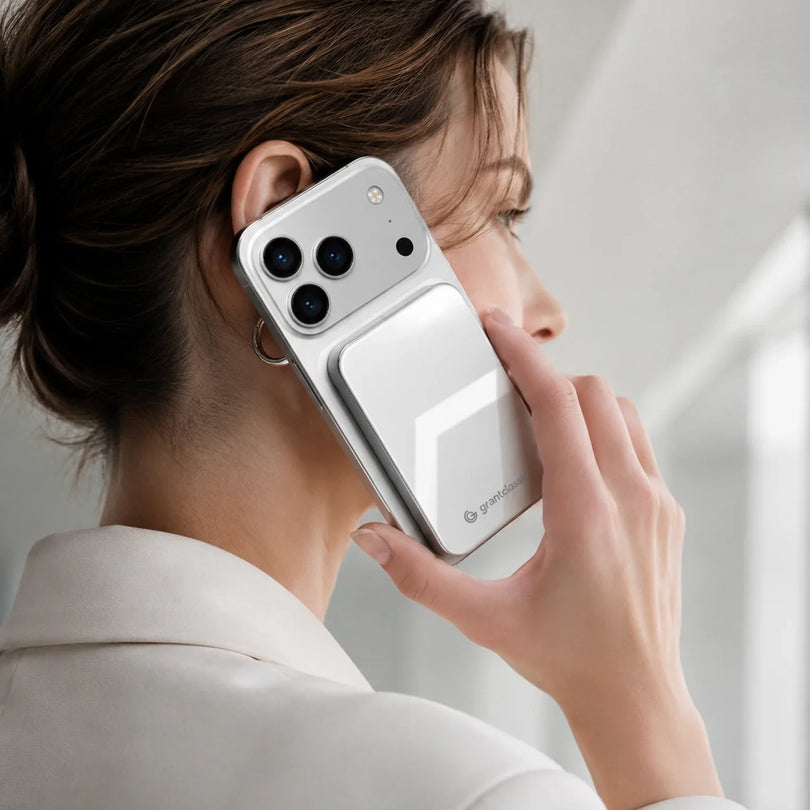
TITANSHIELD Air
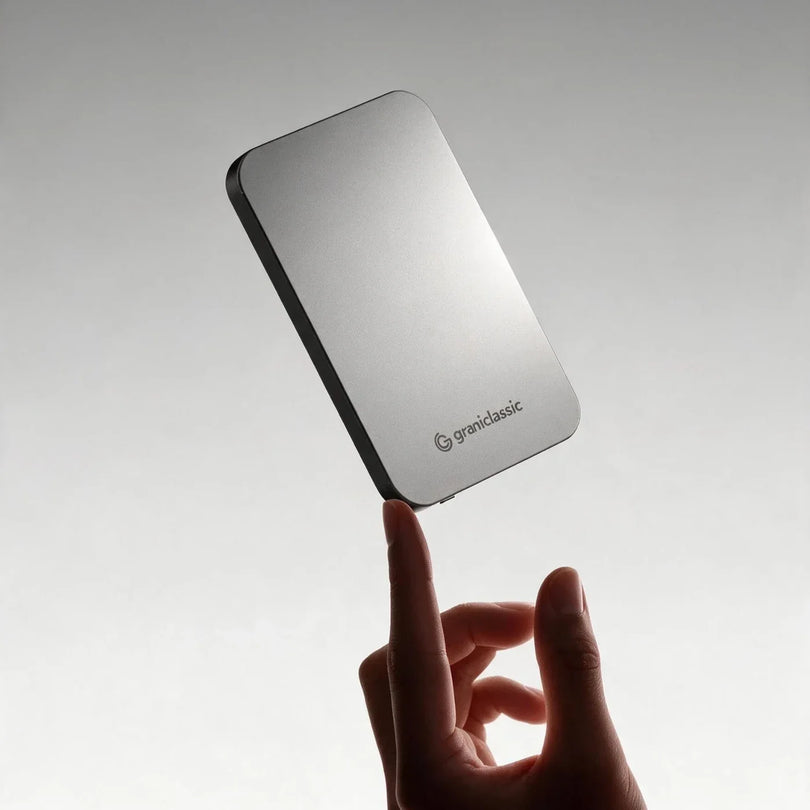
6 mm. 113 g. Slip it in a pocket and you forget it is there.69Learn more about Air ›Pre-order: shipping from around September 15
Ultra-thin
TITANSHIELD Air
6 mm. 113 g. Slip it in a pocket and you forget it is there.69Learn more about Air ›Pre-order: shipping from around September 15
 Everyday balance
TITANSHIELD
5,000 or 10,000 mAh, two capacities. Nine finishes, one cell.From 69See every finish ›
Everyday balance
TITANSHIELD
5,000 or 10,000 mAh, two capacities. Nine finishes, one cell.From 69See every finish ›
 Flagship performance
TITANSHIELD Pro
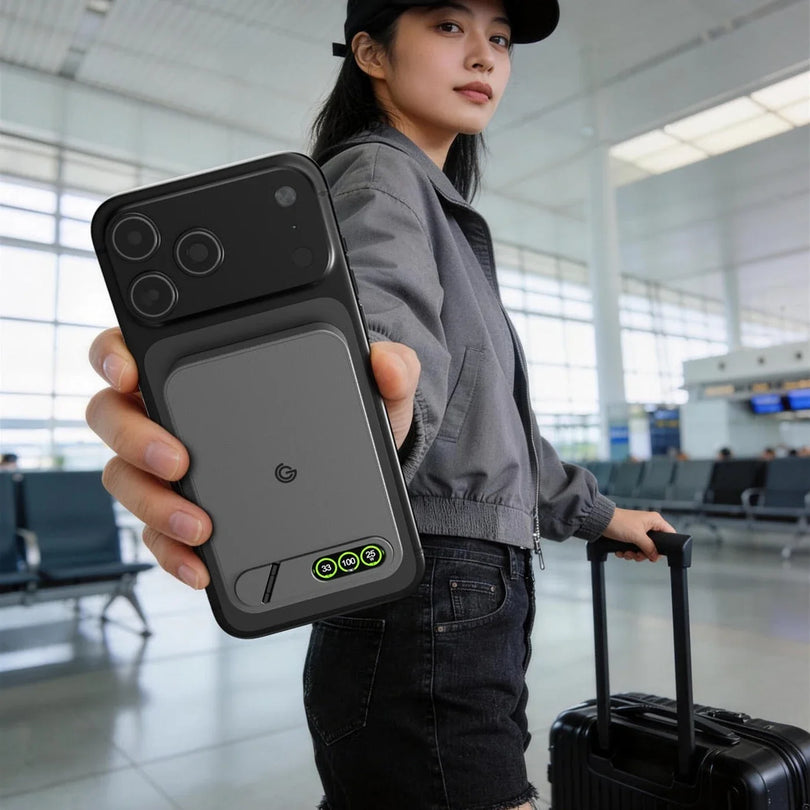
25W wireless, 30W wired. Stand it up while it charges, and it tells you how the battery is doing.99Learn more about Pro ›
Flagship performance
TITANSHIELD Pro
25W wireless, 30W wired. Stand it up while it charges, and it tells you how the battery is doing.99Learn more about Pro ›Three series, side by side.
The difference is thickness, endurance and features.
 TITANSHIELD AirUltra-thin
 |
 TITANSHIELDEveryday balance
 |
 TITANSHIELD ProFlagship performance
 | |
|---|---|---|---|
| Capacity | 5,000 mAh | 5,000 / 10,000 mAh | 10,000 mAh |
| Color | Graphite Black / Polar Silver | Graphite Black / White | Graphite Black / Polar Silver |
| Thickness | 6 mm | 11 / 19 mm | 13 mm |
| Weight | 113 g | 155 / 255 g | 214 g |
| Wireless output | 15W | 15W | 25W |
| Wired output | 18W | 20W | 30W |
| Cell | Semi-solid-state lithium-ion | Semi-solid-state lithium-ion | Semi-solid-state lithium-ion |
| Apple Watch charging | — | — | |
| AirPods charging | |||
| Battery display | — | — | TFT smart display
Battery health · operating temperature · remaining capacity Wireless power · USB-C input/output |
| Folding stand | — | — | Hidden stand Watch while it charges, no hands needed |
| Safety alarm | — | — | |
| Thermal protection | NTC sensing with load reduction | NTC sensing with load reduction | NTC sensing with load reduction |
| Price | 69 | From 69 | 99 |
The standard model comes in 5,000 and 10,000 mAh; the table lists both, separated by a slash (5,000 / 10,000). All three series come in Graphite Black and Polar Silver.
TITANSHIELD Solid-State Power Bank 26 models
 TITANSHIELD Pro 10000 mAh · Marble White
99
TITANSHIELD Pro 10000 mAh · Marble White
99
 TITANSHIELD Pro 10000 mAh · Ukiyo-e Wave
99
TITANSHIELD Pro 10000 mAh · Ukiyo-e Wave
99
 TITANSHIELD Pro 10000 mAh · Everest Black
99
TITANSHIELD Pro 10000 mAh · Everest Black
99
 TITANSHIELD Pro 10000 mAh · Fortune Red
99
TITANSHIELD Pro 10000 mAh · Fortune Red
99
 TITANSHIELD Pro 10000 mAh · Mecha Black
99
TITANSHIELD Pro 10000 mAh · Mecha Black
99
 TITANSHIELD Pro 10000 mAh · Capybara
99
TITANSHIELD Pro 10000 mAh · Capybara
99
 TITANSHIELD Pro 10000 mAh · Mirror Summer Beach
99
TITANSHIELD Pro 10000 mAh · Mirror Summer Beach
99
 TITANSHIELD Pro 10000 mAh · Mirror Bow
99
TITANSHIELD Pro 10000 mAh · Mirror Bow
99
 TITANSHIELD Pro 10000 mAh · Mirror Classic
99
TITANSHIELD Pro 10000 mAh · Mirror Classic
99
 TITANSHIELD Pro 10000 mAh · Mirror Frame
99
TITANSHIELD Pro 10000 mAh · Mirror Frame
99
 TITANSHIELD Pro 10000 mAh · Mirror Say Cheese
99
TITANSHIELD Pro 10000 mAh · Mirror Say Cheese
99
 TITANSHIELD Pro 10000 mAh · Design Edition
99
TITANSHIELD Pro 10000 mAh · Design Edition
99
 TITANSHIELD Pro 10000 mAh · Mirror Edition
99
TITANSHIELD Pro 10000 mAh · Mirror Edition
99
 TITANSHIELD Pro 10000 mAh Solid-State Power Bank
99
TITANSHIELD Pro 10000 mAh Solid-State Power Bank
99
 TITANSHIELD Air Ultra-Slim Solid-State Power Bank 5000 mAh
69
TITANSHIELD Air Ultra-Slim Solid-State Power Bank 5000 mAh
69
 TITANSHIELD Solid-State Power Bank · Mecha Black
69
TITANSHIELD Solid-State Power Bank · Mecha Black
69
 TITANSHIELD Solid-State Power Bank · Mirror Edition
69
TITANSHIELD Solid-State Power Bank · Mirror Edition
69
 TITANSHIELD Solid-State Power Bank · Capybara
69
TITANSHIELD Solid-State Power Bank · Capybara
69
 TITANSHIELD Solid-State Power Bank · Marble White
69
TITANSHIELD Solid-State Power Bank · Marble White
69
 TITANSHIELD Solid-State Power Bank · Fortune Red
69
TITANSHIELD Solid-State Power Bank · Fortune Red
69
 TITANSHIELD Solid-State Power Bank · Ukiyo-e Wave
69
TITANSHIELD Solid-State Power Bank · Ukiyo-e Wave
69
 TITANSHIELD Solid-State Power Bank · Everest Black
69
TITANSHIELD Solid-State Power Bank · Everest Black
69
 TITANSHIELD Solid-State Power Bank 5000 mAh
69
TITANSHIELD Solid-State Power Bank 5000 mAh
69
 TITANSHIELD Solid-State Power Bank 10000 mAh
69
TITANSHIELD Solid-State Power Bank 10000 mAh
69
 TITANSHIELD 10,000 mAh Solid-State Power Bank
49
TITANSHIELD 5000mAh Solid-State Power Bank
49
TITANSHIELD 10,000 mAh Solid-State Power Bank
49
TITANSHIELD 5000mAh Solid-State Power Bank
49
Nothing matches. Try another filter.
The difference is where you cannot see it.
Same power bank. The moment it is punctured, what happens inside is completely different.
Semi-solid-state electrolyte
The electrolyte is locked into a polymer framework - like the water in cured concrete: still there, but it can no longer flow out. A puncture damages one point instead of cascading across the whole electrode.
Liquid electrolyte
The electrolyte moves freely inside the cell. Break the separator and the electrodes connect straight through the liquid, so a short spreads from one point to the whole cell. That is where the fires and smoke in the news come from.
Every claim has a document behind it.
Report numbers, raw data and the certificates themselves are all here.
SGS five safety tests
HE70029 series · 2025
Five tests. Not one fire.
Punctured, overcharged, drained, shorted, baked. Every figure below is raw data from the report.
| Test | What it checks | Peak temperature | Result |
|---|---|---|---|
| Nail penetration | A steel nail driven fully through the cell, simulating a puncture by a sharp object | 39.7°C | No fire, no explosion |
| Overcharge | Charged at 2.5A all the way to 6.6V, simulating a charger that loses control | 98.6°C | No fire, no explosion |
| Over-discharge | Discharged at 5A for 90 minutes straight, drained to the floor | 49.9°C | No fire, no explosion |
| External short circuit | A 20 mΩ conductor placed straight across the terminals | 22.2°C | No fire, no explosion |
| Thermal abuse | Raised to 130°C and held there for 60 minutes, simulating a car parked in the sun | — | No fire, no explosion |
Test lab: SGS Taiwan reliability laboratory (Wugu, New Taipei). The subject is the cell itself, model 706385. Report numbers HE70029 and HE70029A-HE70029D / 2025, tested July-August 2025. Full reports can be requested from SGS by report number.
Japan nail penetration test
No.251692 · both capacities tested
The same thing. In another country. Tested again.
The five SGS tests used the 5,000 mAh cell. This one is an independent nail penetration test by the Chemitox Hokuto LiB Test Center in Japan, and both the 5,000 and 10,000 mAh capacities were tested. The report is titled "Safety Test Report for Semi-Solid-State Batteries" - the "semi-solid-state" classification comes from this report.
| Sample | Smoke | Rupture | Fire |
|---|---|---|---|
| MF706385 (5,000 mAh) | None | None | None |
| MF146386 (10,000 mAh) | None | None | None |
| Report number | No.251692 (November 12, 2025) |
|---|---|
| Test lab | Chemitox, Inc., Hokuto LiB Test Center (Yamanashi, Japan) |
| Test date | November 7, 2025 |
| Method | The cell is removed from the power bank and penetrated by a nail at 1 mm/s, at an ambient temperature of 20°C |
Japan PSE certification
WTF25X10284942 and 1 more
Japan does not allow a power bank on sale without PSE.
PSE is the mandatory certification under Japan's Electrical Appliance and Material Safety Act - without it, a product cannot enter the Japanese market. Both TITANSHIELD capacities hold their own certificate, to JIS C 62133-2:2020, the standard covering lithium secondary batteries for portable equipment.
| 5,000 mAh |
WTF25X10284942 Model 2505-PA07 Internal battery 3.8V / 5,000 mAh / 19 Wh |
|---|---|
| 10,000 mAh |
WTF25X10284943 Model 2507-PA13 Internal battery 3.85V / 10,000 mAh / 38.5 Wh |
| Standard | JIS C 62133-2: 2020 (secondary cells for portable equipment - lithium systems) |
| Issuing body | Waltek Testing Group |
| Issue date | December 22, 2025 |
The certificate numbers can be verified with the issuing body, Waltek Testing Group.
China CCC certification
2025100914641049 and 1 more
China's mandatory certification. Both capacities passed.
CCC is China's compulsory product certification. Power banks and lithium batteries came under it in 2025, and without CCC they cannot be sold in China. GB 31241-2022 is the safety standard for lithium-ion batteries in portable electronics, covering overcharge, over-discharge, short circuit, crush and nail penetration.
| 5,000 mAh | 2025100914641049 Model 2505-PA07 |
|---|---|
| 10,000 mAh | 2025100914651048 Model 2507-PA13 |
| Standards | GB 31241-2022, GB 4943.1-2022 |
| Issuing body | China Quality Certification Centre (CQC) |
| Valid until | November 2030 |
Certificate numbers can be checked on the CNCA website (www.cnca.gov.cn).
BSMI · NCC
R3I037 · certified per model
To sell in Taiwan, there is no way around these two.
BSMI product inspection: power banks are a regulated category in Taiwan and cannot be sold without it. The BSMI mark is printed on both the product and the box.
NCC certification: wireless charging is low-power radio equipment and must be certified by the National Communications Commission, with a separate approval number for every model.
| BSMI registered importer number | R3I037 One number for the whole line |
|---|---|
| NCC Standard 5,000 mAh | CCAH25LP6590T7 |
| NCC Standard 10,000 mAh | CCAH25LPA560T2 |
| NCC Pro 10,000 mAh | CCAP26LP2001T4 |
| Authorities | Bureau of Standards, Metrology and Inspection (BSMI), National Communications Commission (NCC) |
The BSMI R number registers the company responsible for inspection, so the whole line shares one; NCC certifies model by model, so each model has its own. Both can be looked up by number on the BSMI and NCC websites.
Warranty and returns
12 months · 7-day returns
You have checked the documents. Now, what happens after you buy?
| Warranty | 12 months (the same across the line) |
|---|---|
| Return window | 7 days, returnable if you are not satisfied |
| Covered | Functional faults under normal use |
| Not covered | Accidental damage, water ingress, opening or modifying the unit |
| Capacity fade | Normal, not a fault - capacity falls naturally as charge cycles add up |
Full terms and the service process are on the warranty policy page.
Still doing your research?
Power bank safety, how to choose, and solid-state technology - written from our own testing.
 Can a Power Bank Explode? Solid-State Nail Penetration Test and PSE Certification Explained
Are solid-state power banks really safer? A third-party nail penetration report, PSE and CCC certification data, and what the numbers do and do not prove.
Read article ›
Can a Power Bank Explode? Solid-State Nail Penetration Test and PSE Certification Explained
Are solid-state power banks really safer? A third-party nail penetration report, PSE and CCC certification data, and what the numbers do and do not prove.
Read article ›
 Is a Swollen Power Bank Still Safe to Use? Causes and What to Do
Can you keep charging a power bank whose case has bulged? No. Stop using it and stop charging it. Here are the common causes of swelling, the warning signs, the safe steps to take,...
Read article ›
Is a Swollen Power Bank Still Safe to Use? Causes and What to Do
Can you keep charging a power bank whose case has bulged? No. Stop using it and stop charging it. Here are the common causes of swelling, the warning signs, the safe steps to take,...
Read article ›
 How to Read Power Bank Certifications: Capacity Is Not the Point, the Safety Marks Are
How do you judge power bank certifications? This guide covers the BSMI inspection mark, capacity labeling, and cell chemistry, so you stop comparing mAh alone and pick a pack that is genuinely safe and...
Read article ›
How to Read Power Bank Certifications: Capacity Is Not the Point, the Safety Marks Are
How do you judge power bank certifications? This guide covers the BSMI inspection mark, capacity labeling, and cell chemistry, so you stop comparing mAh alone and pick a pack that is genuinely safe and...
Read article ›
 What Is Power Bank Thermal Runaway? The Battery Safety Facts Behind the Airplane Headlines
What is power bank thermal runaway? From cell structure and common causes to lowering the risk, explained in one place, along with how solid-state battery design works and how to pick a pack you...
Read article ›
What Is Power Bank Thermal Runaway? The Battery Safety Facts Behind the Airplane Headlines
What is power bank thermal runaway? From cell structure and common causes to lowering the risk, explained in one place, along with how solid-state battery design works and how to pick a pack you...
Read article ›
 Power Bank Recalls: How to Self-Check and When to Replace
Power bank recalls keep making the news. Is yours safe? Check the official recall list in 30 seconds, run three self-checks, and see how solid-state cells lower the risk at the source.
Read article ›
Power Bank Recalls: How to Self-Check and When to Replace
Power bank recalls keep making the news. Is yours safe? Check the official recall list in 30 seconds, run three self-checks, and see how solid-state cells lower the risk at the source.
Read article ›
You might be wondering.
Is this a true solid-state battery, or semi-solid-state?
TITANSHIELD uses a semi-solid-state cell, not a fully solid-state one. In its November 2025 nail penetration report, the Japanese test lab Chemitox formally classified it as a semi-solid-state battery.
Almost every product labeled a "solid-state power bank" is this kind - a true all-solid-state battery is not yet in consumer production. Countries do not agree on how little electrolyte a cell may hold to be called solid-state, so we do not write our own definition; we use the classification the test lab put in the report.
Even among products labeled solid-state, cells and design quality differ - electrolyte formulation, cell source, protection circuitry and thermal design are not the same, so safety performance is not either. The label cannot tell them apart. The test report can.
Can the battery swell or catch fire?
Swelling is a natural part of lithium battery aging. It can happen with any brand and any technology, usually after years of use or long storage in heat. If you see swelling, stop using the battery immediately and contact us; do not keep charging it.
Fire is exactly what the semi-solid-state formulation is meant to address. Across the five SGS tests - a steel nail driven fully through the cell, a 2.5A overcharge to 6.6V, an hour held at 130°C in a test chamber - there was no fire and no explosion. The Chemitox nail penetration test in Japan recorded no smoke, no rupture and no fire.
These are laboratory conditions applied to the cell itself, and the results apply to the samples tested. Real-world behavior still depends on how a battery is used - avoid heat, crushing and improper charging; the full list is further down this page.
What happens if something goes wrong?
Stop first. Do not keep charging it, and put it somewhere away from anything flammable. If it is already hot or deformed, do not open it and do not put it in household trash.
Then contact us. Tell us what happened through the contact page or customer service, with your order number and photos, and we will tell you what to do next.
The warranty runs 12 months and covers functional faults under normal use; accidental damage, water ingress and opening or modifying the unit are not covered. There is also a 30-day returns if you are not satisfied. Full terms are on the warranty policy page.
How do I choose between 5,000 and 10,000?
For commuting or half a day out, choose 5,000: it is thinner and lighter. For a full day out, or business travel, choose 10,000 and you will not go looking for an outlet.
Fast-charging specs, magnetic attachment and warranty are identical. The only difference is capacity and size.
Can I take it on a plane?
Yes, but it must travel in your carry-on, never in checked baggage.
The general rule from IATA and national aviation authorities grades batteries by rated energy (Wh): up to 100 Wh may be carried on with no prior approval; 100-160 Wh needs airline approval; above 160 Wh is not allowed.
TITANSHIELD prints its rated energy on the unit and in the certification documents: 5,000 mAh is 19 Wh (3.8V) and 10,000 mAh is 38.5 Wh (3.85V), both inside the no-approval band.
The rules that apply are the current ones published by your airline and by the countries you depart from, transit through and arrive in. Some airlines also cap how many you may carry, or require that they not be used in flight or stored in the overhead bin, so it is worth checking again before you travel.
Where is it made?
The cells are produced by a supplier in China; the finished product is developed and quality controlled by grantclassic. It passes all four: Taiwan BSMI product inspection and NCC certification, Japan PSE, and China CCC.
What should I watch out for in daily use?
- Recharge at around 20% and unplug once it is full
- If you are not using it for a long time, charge it at least once every three months
- Keep it out of cars, direct sunlight and hot places
- Do not open or modify it, and do not charge it from a loose or aging extension cord
- If it gets wet, stop using it immediately and do not charge it
- Avoid charging it unattended, and unplug it when you go out
A battery is also a consumable. As charge cycles add up, capacity falls on its own - with any brand and any technology. That is normal, not a fault.