



News stories about power banks smoking or catching fire on flights leave a lot of people wondering whether the one in their bag could suddenly do the same.
The term that comes up in those stories is "thermal runaway." It is not simply a power bank exploding. It is a chain reaction: after an internal short, damage, or abnormal overheating, the battery generates heat faster than it can shed it, so the temperature keeps climbing.
This article covers how thermal runaway works, the common risks, cell chemistry, everyday handling, and the latest 2026 rules for flying with a power bank, so you can make a safer choice without panicking.
What thermal runaway actually is
Thermal runaway is what happens when a lithium battery generates a lot of heat internally and cannot shed it fast enough, which drives further chemical reactions and yet more heat.
A battery may first run abnormally hot, swell, smell odd, or smoke. In severe cases it can release flammable gases, ignite, or rupture. That said, thermal runaway does not always give clear warning signs. A manufacturing defect or internal damage can bring it on suddenly.
The US Federal Aviation Administration (FAA) notes that damage, overheating, water exposure, overcharging, improper packaging, and manufacturing defects can all trigger thermal runaway, and that once the chain reaction starts, the battery can keep heating and can reignite. FAA lithium battery safety guidance
Situations that commonly raise the risk:
- A defect in the cell or separator that creates an internal micro-short.
- A power bank that has been dropped hard, struck, or crushed for a long period.
- Storage in a hot car, direct sun, or another stuffy environment.
- Use of low-quality chargers, cables, or adapters.
- Charging under bedding, a pillow, or inside a bag where heat cannot escape.
- Continuing to charge and discharge a battery that is already aged, swollen, or damaged.
- Charging unattended, so abnormal heat goes unnoticed.
For more on why power banks catch fire and how to store them, see: Can a power bank explode? A complete guide to buying, storing, and using one safely (2026).

Why power banks get so much attention on aircraft
Power banks are small and energy-dense. If one fails in a sealed cabin, the smoke, heat, and risk of reignition can all affect flight safety.
In air transport a power bank counts as a spare lithium battery, so it cannot go in checked baggage and must be carried into the cabin. That is not because a cabin is more fire-prone. It is because passengers and crew can spot overheating or smoke early and act on it immediately.
If a power bank overheats, swells, or smokes in flight, or slips into a seat gap, do not take it apart, squeeze it, or force it out. Notify the cabin crew right away.
What are the new 2026 rules for flying with a power bank?
ICAO published updated provisions in March 2026 that further limit how many power banks passengers may carry and how they may be used in flight. Under the current rules, here is what an ordinary traveler needs to know:
- Power banks are carry-on only and cannot go in checked baggage.
- Each passenger may carry at most two power banks.
- As a general rule, each unit should not exceed 100 Wh.
- Units above 100 Wh and up to 160 Wh need advance airline approval, and the airline may decline.
- Above 160 Wh, a unit generally cannot travel as ordinary passenger baggage.
- You may not use aircraft power outlets or USB ports to charge a power bank.
- Store each one separately so ports and terminals do not touch keys, coins, or other metal.
- Keeping one in the overhead bin is discouraged. Keep it within view or under the seat in front of you.
- Airlines may impose stricter limits than the international rules.
ICAO's latest technical instructions set a limit of two power banks per person and prohibit charging the power bank itself in flight. IATA likewise advises passengers to keep power banks on their person and out of overhead bins, and notes that airlines may apply stricter measures. ICAO 2026 power bank rules, IATA 2026 passenger lithium battery guidance
China Airlines, EVA Air, and STARLUX currently all cap passengers at two units and prohibit both using a power bank to charge other devices and charging the power bank itself during a flight. China Airlines inflight safety notice, EVA Air power bank rules, STARLUX power bank rules
To convert a power bank's capacity to Wh:
Wh = mAh / 1000 x labeled battery voltage (V)
For example, a 10,000 mAh power bank labeled at 3.7 V works out to about 37 Wh. Cell voltage differs between products, so at the airport go by the Wh figure printed on the unit.
Before you travel, check the rules for your airline, your departure airport, and any connection point rather than relying on past experience. For a fuller explanation of capacity and carriage, see: Can solid-state power banks fly? The 2026 ICAO rules and which one to pack.

Does cell chemistry change the thermal runaway risk?
It does, but chemistry alone does not decide how safe a product is.
Conventional liquid lithium batteries contain a higher proportion of liquid electrolyte. When a cell is punctured, struck, or shorted internally, high heat can break that electrolyte down and produce flammable gases.
Solid-state and semi-solid-state batteries reduce the share of liquid electrolyte or use a more stable electrolyte structure, which improves thermal stability and puncture resistance. Given sound design, process, and quality control, that helps lower the risk of sustained heat release and combustion after an internal short.
But "solid-state" does not mean thermal runaway is impossible. Solid-state and semi-solid-state batteries on the market differ in material ratios, chemistry, and manufacturing, so the name alone tells you little. Cell quality, protection circuitry, thermal management, case structure, and certification matter just as much.
The safety thinking behind TITANSHIELD's solid-state design
The TITANSHIELD line uses solid-state cells, with the goal of reducing the chance that a puncture, impact, overcharge, or abnormal temperature rise sets off a thermal runaway chain reaction, starting with the battery materials and the overall structure.
Beyond cell chemistry, the products are checked against regulatory certifications, wireless charging standards, and third-party safety testing. Depending on the sales region and feature set, models carry the corresponding BSMI inspection, NCC approval, China CCC certification, and Qi2.2 WPC wireless charging certification.
For battery safety specifically, SGS in Taiwan carried out several tests, including:
- Nail penetration test
- Over-discharge test
- Thermal abuse test
- Overcharge test
- External short circuit test
Each test simulates a different abnormal condition, from puncture and high heat to excessive charge and discharge and an external short, to check how the cell and its protection design behave under those risks.
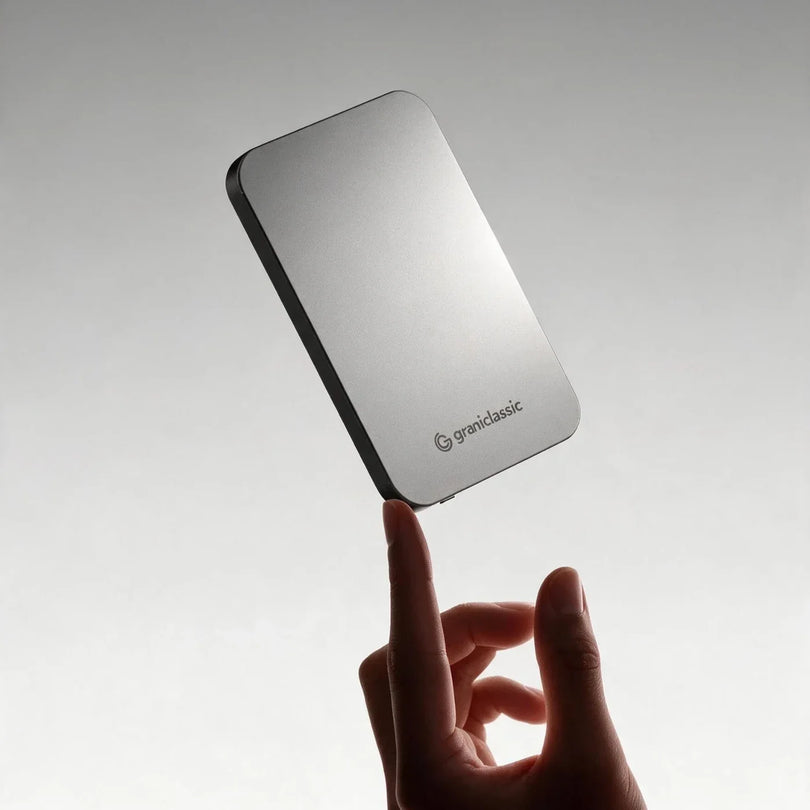
For a full day out, travel, or several phone top-ups, the higher-capacity TITANSHIELD 10,000 mAh Solid-State Power Bank balances runtime with the need to recharge on the go.
For daily commuting, short trips, or an emergency backup, the TITANSHIELD 5,000 mAh Solid-State Power Bank is smaller and lighter, and easier to keep in an everyday bag.
Besides plain black and white, there are design editions such as Capybara and Fortune Red, so you can pick by personal style.
One point to be clear about: certification and testing show that a product meets the corresponding standards or test conditions. They do not mean any battery is risk-free in every situation. Correct use, proper storage, and regular checks still matter.

How to lower thermal runaway risk day to day
Lower risk does not come from cell chemistry alone. Habits count for just as much.
- Do not leave a power bank in a hot car or in direct sun for long periods.
- Avoid hard drops, impacts, bending, and long stretches crushed inside luggage.
- Keep it ventilated while charging. Not under bedding, a pillow, or inside a closed bag.
- Avoid long charging sessions while asleep or unattended.
- Use chargers and cables that match the spec and come from a known source.
- Unplug once it is full, so it does not sit hot and at full charge for hours.
- Check the case, the ports, and the seams now and then for deformation or damage.
- Stop using it immediately if it swells, runs abnormally hot, smells odd, or charges erratically.
Taiwan's Bureau of Standards, Metrology and Inspection (BSMI) also advises buyers to confirm the BSMI inspection mark and to check the R-series code, designated code, model number, and manufacturer details rather than treating a single logo as proof of safety. Further reading: How to read power bank certifications: capacity is not the point, the safety marks are
If you often bring a power bank to concerts and fan events, watch out for the heat that builds up from long recording sessions, charging while filming, and hot crowds. Further reading: Which power bank for concerts? Capacity, weight, and charging while you record.
Does the risk rise as a power bank gets older?
Lithium batteries are consumables. As charge cycles add up, capacity falls and internal resistance can rise, so the pack generates more heat in use.
There is no universal "throw it out after X years" rule for power banks. Actual life depends on cell quality, how often you use it, your charging habits, and where you keep it.
If a power bank is two or three years old and starts doing any of the following, it is worth replacing:
- It puts noticeably less charge into your phone.
- Charging or discharging suddenly slows or fluctuates.
- It runs hotter than it used to with the same devices.
- The charge indicator behaves oddly, drops to zero fast, or never fills.
- The case seams bulge, swell, or deform.
- There is an odd smell, an odd sound, or scorch marks around the port.
For details on charge cycles and care, see: How long does a power bank last? A complete guide to charge cycles, care, and longer life.
What to do if your power bank swells
Once a power bank swells, stop using and charging it. Do not squeeze it, puncture it, or take it apart.
Stop using it, keep it away from flames, heat, and anything flammable, and follow your local rules for recycling lithium batteries. Never put it in household trash or a garbage truck, where it could be damaged during compaction and catch fire.
Taiwan's Ministry of Environment states that a swollen battery should be taken out of service immediately and can be handed to a recycling truck or to convenience stores, supermarkets, and big-box stores that accept batteries. Package it on its own before recycling, and tell the staff that the battery is swollen or damaged. Ministry of Environment lithium battery recycling guidance
How to judge a power bank when you buy
Do not compare capacity and price alone. At a minimum, confirm the following:
- Whether it carries a BSMI inspection mark whose details you can verify.
- Whether the brand publishes the model, capacity, Wh, input/output, and manufacturer details.
- Whether the cell chemistry and safety design are clearly explained.
- Whether it has overcharge, over-discharge, short-circuit, overcurrent, and temperature protection.
- Whether there is a real warranty, support, and a way to report problems.
- Whether the Wh and specs on the case are legible, which makes airport screening easier.
- For wireless charging models, whether there is matching Qi or Qi2 certification information.
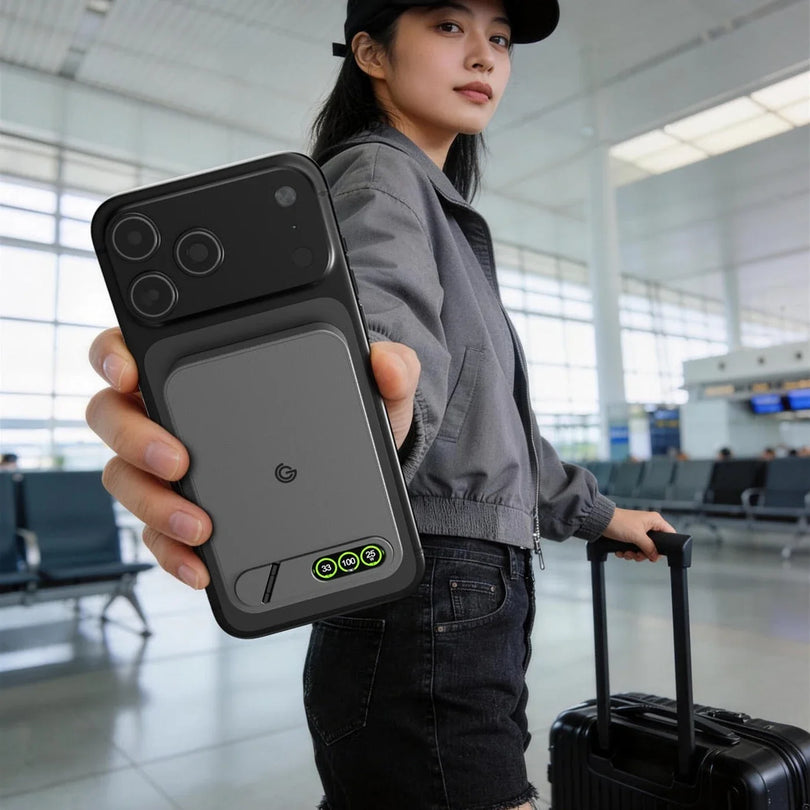
If you are considering a magnetic wireless charging model, TITANSHIELD Pro supports Qi2.2 25W wireless fast charging and holds official WPC certification under QI-ID 27410. For the differences, see: TITANSHIELD Pro MagSafe power bank: what Qi2.2 WPC certification means, and how it differs from ordinary Qi2.
For a full framework covering capacity, safety, and use cases, see: How to choose a power bank: the 2026 buying guide to capacity, safety, and use cases.

FAQ
Is there always a warning sign before thermal runaway?
Not always. Some units first run abnormally hot, swell, deform, smell odd, or smoke, but an internal short or manufacturing defect can also cause it suddenly. Any behavior that differs from normal is a reason to stop charging it.
Are solid-state batteries immune to thermal runaway?
No. Solid-state and semi-solid-state batteries can improve thermal stability through materials and structure, which helps lower some risk, but nothing guarantees that thermal runaway cannot occur under every impact, short, high temperature, or misuse.
Can I take a power bank on a plane?
Yes, but only in carry-on baggage, never checked. Under the latest 2026 rules, an ordinary passenger may carry at most two, and each should ideally stay under 100 Wh; 100 to 160 Wh requires advance airline approval. China Airlines, EVA Air, and STARLUX currently prohibit using a power bank or charging one during a flight.
Can I put a power bank in the overhead bin?
The latest rules recommend or require keeping them out of overhead bins. Store one under the seat in front of you or somewhere else you can see it. Follow your airline's and the cabin crew's instructions.
What are TITANSHIELD Pro's wireless charging specs?
TITANSHIELD Pro supports Qi2.2 25W magnetic wireless fast charging and holds official WPC certification. Real-world charging power still depends on your phone model, its charge level, thermal management, your case, and the environment.
 TITANSHIELD Pro 10000 mAh Solid-State Power BankSolid-state cell, 25W wireless fast chargin...
View product
TITANSHIELD Pro 10000 mAh Solid-State Power BankSolid-state cell, 25W wireless fast chargin...
View product


