



The first thing to check when buying a power bank is not how big the capacity is or how fast it charges. It is whether the product carries a valid safety inspection mark.
Power banks are high-energy-density lithium battery products. Under Taiwan's rules, units sold there must complete the BSMI inspection process and carry the commodity inspection mark. However high the capacity or good the design, if you cannot find the full BSMI mark and registration details, it is not worth buying.
In short, the order to buy in is:
- First confirm the BSMI inspection mark and registration data
- Then look at cell chemistry, safety structure, and test information
- Last, choose capacity, charging method, and design by how you will use it
This article explains the difference between BSMI, NCC, and Qi2, and helps you find the right power bank for commuting, full days out, and multi-device charging.
How do you read power bank safety certifications? BSMI is the baseline
Power banks have been a regulated product category in Taiwan since 2014. Imported and domestically made units must complete the required inspection process before they reach the market and can only be displayed and sold there once they meet the requirements.
Before you buy, check the unit or the packaging for:
- The BSMI commodity inspection mark
- The R-series code and designated code, such as R12345
- Brand, model number, and rated capacity
- Input and output power and battery energy in Wh
- The name and contact details of the responsible local company
Do not treat the BSMI logo alone as proof. Check that the full R-series code and designated code sit alongside it. You can enter the code in the Bureau of Standards, Metrology and Inspection's commodity inspection mark lookup system and check that the registered company and model match the product in your hand.
Taiwan's Bureau of Standards, Metrology and Inspection (BSMI) also advises buyers to look for the BSMI commodity inspection mark, the R-series code, and the designated code. BSMI is not just a logo on a box. It is how you tell whether a product completed Taiwan's required inspection process.
What is the difference between BSMI, NCC, and Qi2?
Power banks often list BSMI, NCC, and Qi2, but the three cover different ground and none substitutes for another.
|
Item |
What it means |
How to check it |
| BSMI commodity inspection mark | Battery and electrical safety, and the regulatory threshold for the Taiwan market | Check the R-series code, designated code, and matching model |
| NCC approval | For regulated radio and communication functions, confirming frequency, transmit power, and interference meet the rules | Check the NCC approval label or approval number and match it to the model |
| Qi / Qi2 certification | Wireless charging safety, efficiency, and interoperability between devices | Check for the official Qi logo and Qi ID, and verify the registration on the WPC site |
BSMI is mainly about the electrical safety of the battery and the product. NCC covers regulated radio and communication functions. If a power bank has a wireless feature subject to NCC approval, check that the unit or packaging carries an approval label or number and that the lookup data matches the actual model.
Qi2 is a wireless charging industry standard set by the Wireless Power Consortium, focused on charging efficiency, safety, and interoperability across devices. "Qi2 compatible" and "Qi2 certified" do not mean the same thing. A formally certified product receives a QI-ID and is listed in the WPC's official product database.
Put simply: BSMI covers product and battery safety, NCC covers radio and communication functions, and Qi2 covers wireless charging specs and interoperability. Because the three test different things, do not just count the logos on a listing. Check that each one can actually be looked up and that it matches the model you are buying.
Does a BSMI mark mean nothing can go wrong?
BSMI is a necessary safety threshold, but it does not mean a product will behave normally under any use or in any environment.
Real-world safety still depends on cell quality, protection circuitry, thermal design, build quality, age, and charging conditions. So after you verify BSMI, go a step further and see whether the brand publishes safety test information for puncture, high heat, crushing, overcharge, or short circuit.
A fuller way to judge has three layers:
- A BSMI commodity inspection mark you can look up
- Registered company and model that match the actual product
- Cell or full-product safety test data the brand can provide for that model
If a brand only says "passed safety certification" without naming the certification, the model tested, or how to verify it, there is no way for a shopper to tell whether the claim applies to the product in front of them.
Why capacity alone tells you nothing
Capacity says how much energy a power bank stores. Safety is a separate question.
High capacity is not high safety, and low capacity is not low risk. What decides safety is cell quality, protection circuitry, temperature control and thermal design, build quality, and whether the product completed the appropriate inspection process.
Some no-name high-capacity power banks use inconsistent cells or fail to publish full rated capacity and output specs. Over time, as cells age, heat builds, or an internal short develops, the risk of abnormal heat, swelling, and thermal runaway goes up.
So use capacity to judge whether a pack is big enough, not whether it is safe. For more on swelling, heat, and storage, see Can a power bank explode? A complete guide to buying, storing, and using one safely.
How to choose cell chemistry: the word "solid-state" is not enough
Cell chemistry is one of the bigger factors in safety.
Conventional liquid lithium batteries contain more liquid electrolyte, so a puncture, crush, high heat, or internal short raises the risk of electrolyte leakage and thermal runaway. Solid-state lithium cells use a different electrolyte and structure to improve thermal stability and puncture resistance, which helps lower the risk of smoke, combustion, or fire in extreme conditions.
That said, "solid-state cell" does not equal absolute safety. Come back to the actual product and confirm:
- Whether it has a complete BSMI commodity inspection mark
- Whether the solid-state cell description is clear
- Whether safety test data is available for that model
- Whether it has overcharge, over-discharge, short-circuit, and temperature protection
- Whether the brand offers a warranty and a way to report problems
In other words, cell chemistry is an important point of comparison, but it does not replace certification and a complete safety design.
[Figure 1: solid-state cell and safety testing]
5,000 mAh or 10,000 mAh?
Once certification, cells, and safety design check out, choose capacity by how you actually use it.
Short commutes and everyday errands: around 5,000 mAh
If you are commuting, heading out for a meal, or just topping up now and then, around 5,000 mAh is usually light and easy to carry. There is no reason to carry weight you will not use.
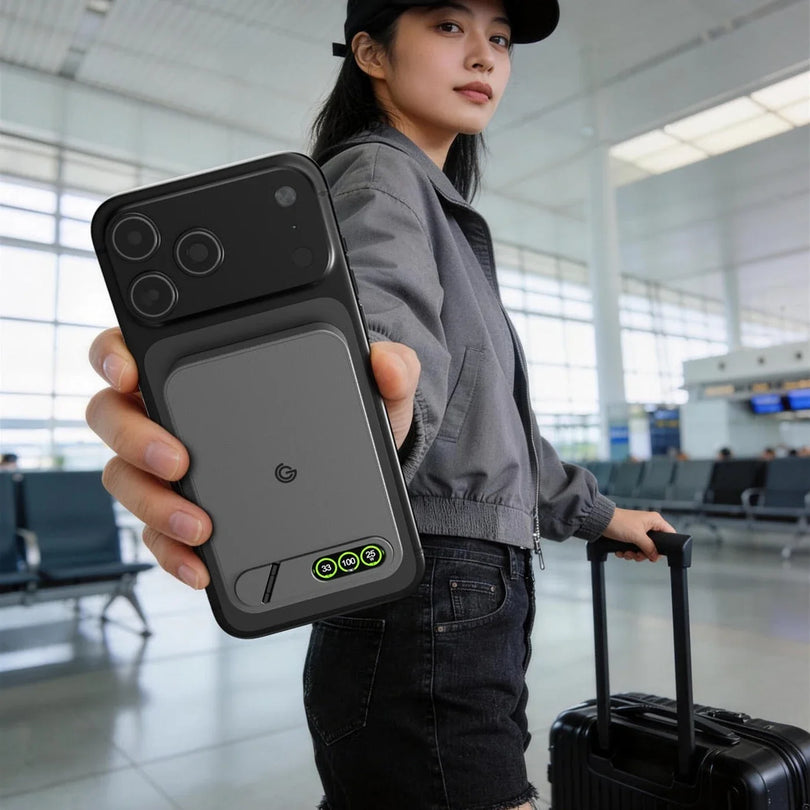
The TITANSHIELD 5,000 mAh Solid-State Power Bank is built for short trips and commuting. It uses solid-state cells and has MagSafe precise-alignment wireless charging with a Qi2-compatible design. Go by the product page and your device's specs for real-world charging power and compatibility.

Long days out and travel: the 10,000 mAh class
If you are out for long stretches, traveling for work, or charging a phone plus earbuds and other devices, the 10,000 mAh class gives you more headroom.
The TITANSHIELD 10,000 mAh Solid-State Power Bank suits travel and full days out. It also uses solid-state cells and supports MagSafe magnetic wireless charging with a Qi2-compatible design. Beyond capacity, compare weight, rated capacity, output power, and supported devices.

Concerts, events, and charging while you record
Concerts and event photography run the camera, screen, and cellular data at once, so the battery drains faster than usual. Along with capacity, think about the power bank's weight, how securely it magnetizes, and how it handles heat while charging.
For a fuller approach, see Which power bank for concerts? Capacity, weight, and charging while you record.
Once the safety specs check out, pick the look you like
Safety and style do not conflict. Once BSMI, the cells, and the charging specs are settled, choose the design that fits how you carry it and what you like.
For something softer, there is the Capybara design, which makes a power bank feel like an everyday accessory.

For something festive and eye-catching, there is Fortune Red, which stands out as a gift or for yourself.

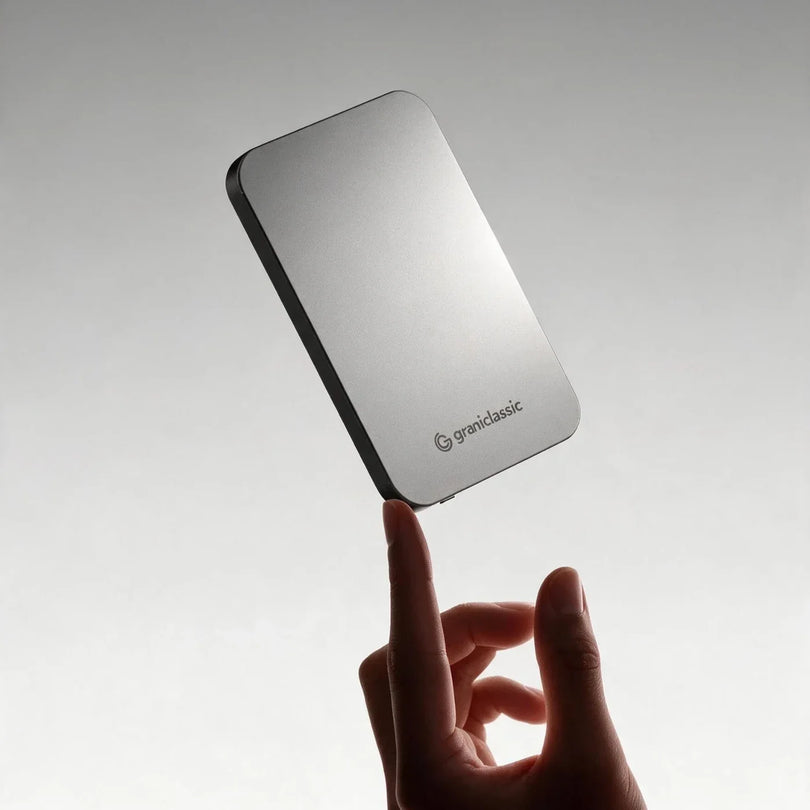
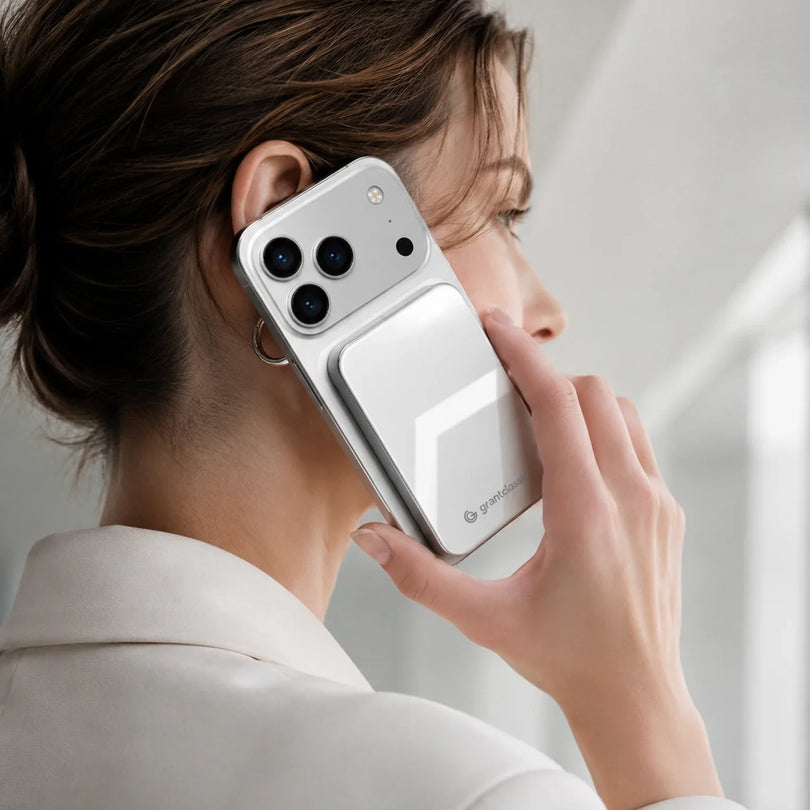
For something clean and minimal, there is the Mirror Edition. The polished surface reads as both technical and practical, and it doubles as a pocket mirror when you are out.

Classic, design edition, or mirror, go by the model you are actually buying and check the BSMI mark, capacity, and output specs on the unit. The look can vary. The safety check cannot be skipped.
A pre-purchase checklist
When you are ready to buy, run through this in order:
- Is there a complete BSMI commodity inspection mark
- Is there an R-series code and designated code
- Can the code be found in the official system
- Do the registered company and model match the product
- Are capacity, rated capacity, Wh, and input/output power clearly labeled
- Are the cell chemistry and safety protections fully explained
- If it has radio or communication features, can the NCC approval number be looked up and matched to the model
- Does the listing clearly distinguish "Qi2 compatible" from "Qi2 certified"
- Do the capacity and weight suit how you will use it
- Does the brand offer a warranty, support, and a recycling channel for failures
If you are still unsure how to weigh capacity, power, weight, and charging method, see How to choose a power bank: the 2026 buying guide.
FAQ
Does a power bank have to carry a BSMI commodity inspection mark?
Power banks sold in Taiwan are a regulated product category, so look for a complete BSMI commodity inspection mark, R-series code, and designated code when you buy. If you cannot find the mark, or the code returns no matching record, there is no way to confirm the product completed the required inspection process.
How do I look up a BSMI commodity inspection mark?
Find the R-series code and designated code on the unit or packaging, enter the code in the Bureau of Standards, Metrology and Inspection's lookup system, then check that the registered company and model match the product.
Can BSMI and NCC substitute for each other?
No. BSMI mainly covers a product's battery and electrical safety. NCC evaluates regulated radio and communication functions. They cover different things, and a product subject to both should complete both processes.
Does "Qi2 compatible" mean Qi2 certified?
Not quite. "Qi2 compatible" means the product works with related wireless charging devices. Formal Qi2 certification requires completing the WPC's testing, receiving a certification ID, and being listed in the official product database. Check which one a brand is claiming.
Are solid-state cells fireproof?
No battery product should claim it cannot catch fire under any circumstances. Solid-state cells can improve thermal stability and puncture resistance through materials and structure, but they still need proper certification, protection circuitry, thermal design, and correct use.
Is a bigger capacity safer?
No. Capacity only says how much energy a pack stores; it has no direct bearing on safety. Confirm BSMI, cells, protections, and test data first, then choose capacity by how you will use it.
Which capacity for short commutes versus long days out?
For short commutes and everyday errands, around 5,000 mAh is usually the lighter, easier option. For long days out or charging several devices, the 10,000 mAh class makes more sense. Whichever you choose, verify the BSMI mark and model first.
 TITANSHIELD Pro 10000 mAh Solid-State Power BankSolid-state cell, 25W wireless fast chargin...
View product
TITANSHIELD Pro 10000 mAh Solid-State Power BankSolid-state cell, 25W wireless fast chargin...
View product


