



A swollen power bank does not mean an explosion is seconds away, but it does mean something has gone wrong inside the cell. Charging or discharging it, squeezing it, or leaving it somewhere hot all raise the risk of an internal short, smoke, or fire. A swollen cell cannot be brought back by draining it, resetting it, or pressing the case flat again. The safe move is to stop using it and recycle it properly.
Why do power banks swell?
Most power banks use lithium-ion or lithium-polymer cells. After long use, heat, age, or damage, the materials inside can produce side reactions that generate gas.
That gas has nowhere to go, so it gradually pushes the cell and the case apart. That is the bulge, or swelling, people describe.
Common causes include:
1. Normal cell aging
Lithium batteries are consumables. As charge cycles add up, the materials inside degrade and internal resistance rises. Capacity drops, and the pack tends to run warmer while charging.
Even a power bank you rarely use ages over time, so "does it still charge my phone" is not a safety test.
2. Long stretches in high heat
Leaving a power bank in a sun-baked car, on a windowsill, in a scooter storage compartment, or in a hot bag speeds up cell aging and the chemistry inside.
Heat does not always cause swelling right away, but it shortens battery life over time and raises the odds of abnormal heat and failure.
3. Charging faults or failed protection circuits
A well-made power bank usually has overcharge, over-discharge, overcurrent, and temperature protection. But with a poorly built product, a failed protection circuit, or long-term use of unknown or mismatched chargers and cables, the cell can still see voltage, current, or temperatures outside its limits.
4. Drops, impacts, or long-term pressure
Dropping a power bank, crushing it under something heavy, bending it, or hitting it with something sharp can damage the separator structure inside. An undamaged-looking shell is no guarantee the cell inside is intact.
If a pack starts running hot, charging erratically, deforming, or smelling odd after a drop, stop using it immediately.
5. Moisture, water damage, or manufacturing defects
Moisture inside can cause corrosion or a short. A small number of units also swell early because of cell quality, assembly, or material problems.
If the product is still under warranty, contact the brand or retailer you bought it from to ask how to proceed. Do not take apart or ship a power bank that is visibly swollen or running hot.
Does a swollen power bank always explode?
No, but the risk has gone up.
"Swelling" and "thermal runaway" are not the same state. Swelling means the cell has generated abnormal gas or its materials have degraded. Thermal runaway is a chain reaction in which the battery generates heat faster than it can shed it, so the temperature keeps climbing.
In other words, swelling is not thermal runaway, but the structure of a swollen battery is no longer stable. Keep charging, discharging, squeezing, or puncturing it, or leave it in high heat, and you can trigger an internal short, leakage, smoke, or fire.
So "it hasn't smoked yet" tells you nothing about whether it is safe, and one more test charge is not a good idea.
For more on why batteries smoke or catch fire, see: What is power bank thermal runaway? The battery safety facts behind the airplane headlines.
How do you tell whether a power bank has swollen?
Early swelling is not always obvious. Check these places:
- An unnatural bulge in the middle or on the back of the case
- A once-flat power bank that now rocks on a table
- Seams pushed open or gaps appearing along the case
- Buttons, the display, or a panel pushed outward
- A warped magnetic face that no longer sits flat against a phone
- Noticeably more heat while charging than before
- A sharp smell, a hissing sound, or erratic charging
Once you can see that the case has bulged, you do not need to wait for other symptoms. Stop using it.
What to do when a power bank swells
Step 1: Stop using and charging it right away
Do not charge your phone with it, and do not try to run the remaining charge down.
If it is charging and there is no abnormal heat, smoke, or strong smell, you can cut the power once you are sure it is safe to do so. If it is already hot, smoking, making noise, or giving off a strong odor, do not pick it up. Get away from it.
Step 2: Do not press, puncture, or open it
Do not try to push the bulge back in, and do not pierce it with a needle, cut it open, or swap the cell yourself.
Puncturing or crushing a cell can bring the positive and negative sides into direct contact, which is one of the fastest ways to cause a sharp temperature spike and a fire.
Step 3: Park it somewhere safe for now
While it waits for recycling, keep it somewhere cool, dry, and ventilated, away from anything flammable and out of direct sun. Do not leave it in a car, in bedding, in a cardboard box, in a pile of plastic bags, or anywhere children or pets can reach.
Do not seal a swollen battery in an airtight container.
Step 4: Contact the brand, the retailer, or a recycler
If the product is still under warranty, send the model number, purchase date, and photos of its condition to the brand's support team, and ask whether there is warranty coverage, a recall, or a specific recycling process.
If the warranty has expired, follow your local rules for recycling lithium batteries. When you hand it over, tell the staff directly: "this power bank has swollen." Do not just drop it in a bin and leave.
Step 5: Never put it in household trash or a garbage truck
Taiwan's Ministry of Environment states plainly that a swollen battery must not be used any further and should be taken out of service and recycled. Power banks must not go into household trash either, in case they are damaged and ignite during compaction or transport.
In Taiwan, you can ask:
- Municipal recycling trucks
- Convenience stores that accept used batteries
- Supermarkets and big-box stores
- Consumer electronics and phone retailers
- Licensed dry-battery recyclers and processors
- Whether a given location will accept an already swollen power bank depends on its safety equipment and its own rules, so call ahead before you go. For details, see the Ministry of Environment's lithium battery recycling pages.

These fixes sound reasonable and are actually dangerous
Once you find swelling, none of the following is a good idea:
- Charging it once more to see whether it still works
- Running the remaining charge all the way down
- Pressing on it by hand to gauge how swollen it is
- Puncturing the case with a needle or knife to let the gas out
- Opening it up, swapping cells, or separating the pack yourself
- Putting it in the refrigerator to cool it down
- Throwing it in a trash can or garbage truck
If a power bank is already smoking, hissing, giving off a strong smell, or heating rapidly, recycling is not the priority. Leave the area, avoid breathing the smoke, and call the fire department.
How do you lower the risk of swelling?
Cells age with time, and no power bank can promise it will never swell. Good habits do lower the risk and extend its life.
Keep it out of heat and direct sun
In particular, do not leave it for long stretches in a car, a scooter storage compartment, or on a windowsill. A closed car in summer can heat up fast, which is hard on lithium batteries.
Keep it ventilated while charging
Do not tuck a charging power bank under bedding, a pillow, clothing, or into a closed bag, and try not to charge while asleep or for long stretches unattended.
Avoid hard drops and sustained pressure
After a drop, watch for abnormal heat, erratic charging, or deformation even if the case looks intact.
Use chargers and cables that match the spec
Choose chargers and cables from a known source that meet the product's requirements, and avoid damaged accessories, loose connectors, and no-name gear.
Check the case and charging behavior regularly
If capacity drops noticeably, the charge level plummets, the pack runs hot or smells odd, charging cuts in and out, or the case deforms, stop using it and plan a replacement.
Not sure whether the one in your bag is ready to retire? See: How long does a power bank last? A complete guide to charge cycles, care, and longer life.
What should you check first when buying a power bank?
Capacity, price, and looks are not the whole story. At a minimum, confirm:
- Whether the unit itself carries the BSMI inspection mark
- Whether the R-series code, designated code, and model number line up
- Whether the manufacturer name, address, and production date are clearly labeled
- Whether rated capacity, energy in Wh, and input/output specs are complete
- Whether it has overcharge, over-discharge, short-circuit, overcurrent, and temperature protection
- Whether the cell chemistry and related test information are clearly explained
- Whether the brand offers a real warranty and a way to report problems
Taiwan's Bureau of Standards, Metrology and Inspection (BSMI) also notes that power banks are a regulated product category, so buyers should check for the inspection mark and full local-language specs rather than assuming a certification logo alone means the product is safe. For how to read those marks, see: How to read power bank certifications: capacity is not the point, the safety marks are.
Are solid-state power banks less likely to swell?
Compared with conventional lithium batteries that use more flammable liquid electrolyte, solid-state and semi-solid-state cells can improve thermal stability and puncture resistance through their materials and structure, which helps reduce some internal-short and thermal-runaway risk.
But "solid-state" does not mean a cell will never age, swell, or catch fire. Cell quality, protection circuitry, overall product design, manufacturing controls, and everyday handling all shape how safe a pack is.
So do not buy on the words "solid-state battery" alone. Check the BSMI inspection mark, the product specs, the test information, and the brand's warranty.
Which TITANSHIELD solid-state power bank should you pick?
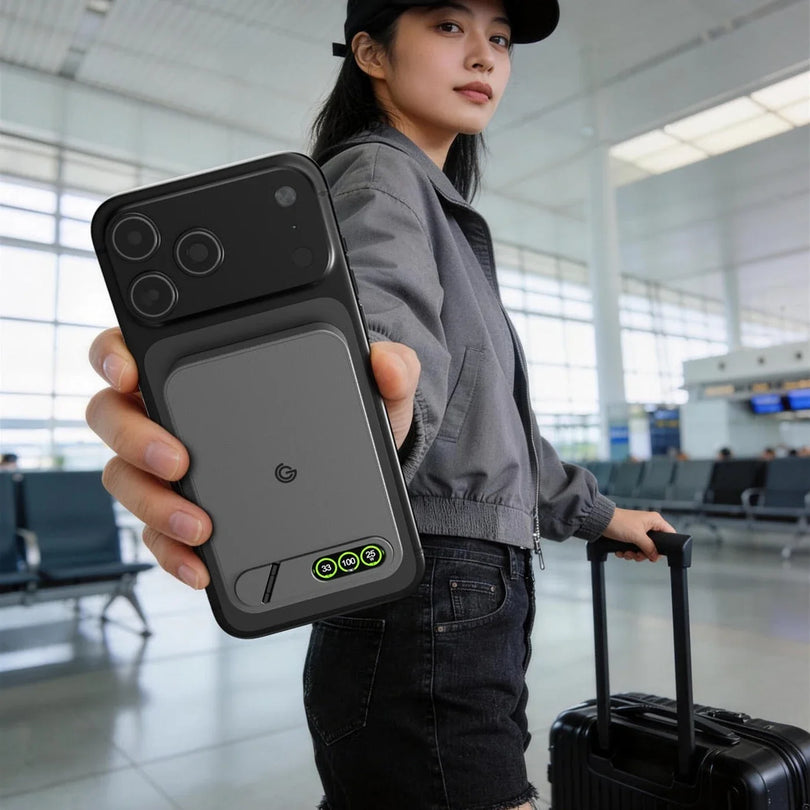
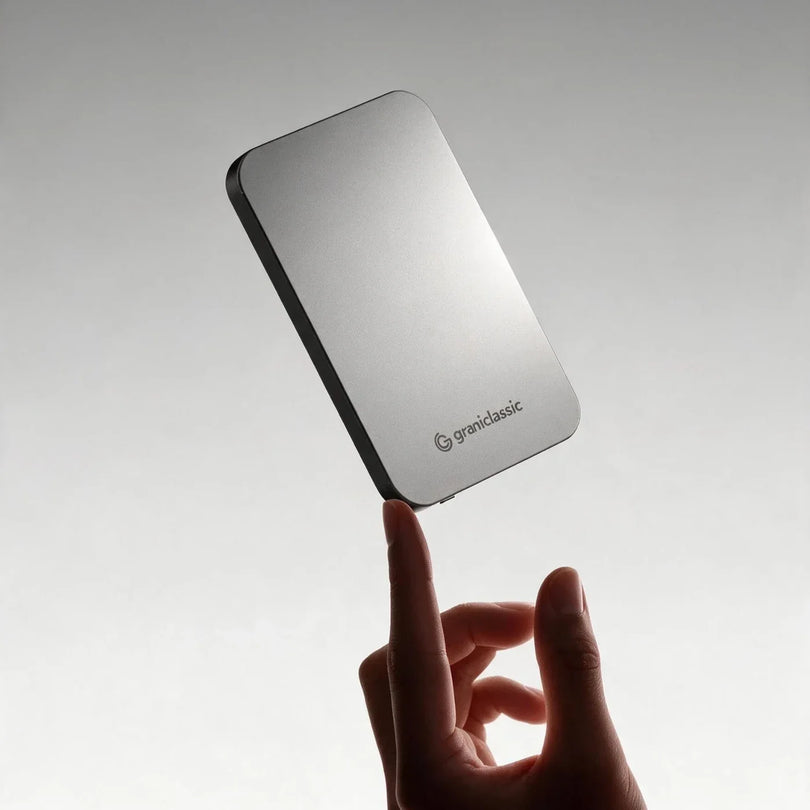
The TITANSHIELD line uses solid-state cells, designed for better thermal stability and puncture resistance, with magnetic wireless charging and USB-C wired fast charging. Pick the capacity that matches how long you are out and how much you want to carry.
TITANSHIELD 10,000 mAh Solid-State Power Bank
Built for long commutes, travel, and full days out. 10,000 mAh, with 20W USB-C PD wired fast charging, 15W wireless charging, and MagSafe magnetic alignment.
It currently sells for $79. Price and specs on the product page are the ones to go by.
TITANSHIELD 5,000 mAh Solid-State Power Bank
If you mostly need a short-commute top-up or want to keep your bag light, the 5,000 mAh version is smaller, with the same 20W USB-C PD wired fast charging, 15W wireless charging, and MagSafe magnetic alignment.
It currently sells for $69. More details on the product page.
Safety first, then pick a look you like
If you want something other than plain black or white, the TITANSHIELD line comes in several designs.
The Capybara design goes soft and cheerful. Fortune Red suits anyone who likes a festive color or is shopping for a gift. Both currently sell for $69; the product page has the current price.
Bottom line: if it is swollen, stop using it
A swollen power bank will not necessarily explode, but it is a clear sign that the cell has gone wrong.
At that point the question is not "how much longer will it last." Stop using and charging it, do not squeeze, open, or puncture it, and hand it to an appropriate recycling channel under your local rules.
Day to day, keep it away from heat, impacts, and improper charging, and check the case and charging behavior now and then. When you buy, confirm the BSMI inspection mark, full specs, protection features, and the brand's warranty, so the pack is covered from first use to retirement.
FAQ
Does a swollen power bank always explode?
No, but it does mean something has gone wrong inside the cell, and the risk from here cannot be predicted from the outside. Stop using it, and do not keep charging or discharging it or leave it in high heat.
The bulge is small. Can I keep using it?
Not recommended. A small bulge does not mean low risk. Once you can see an unnatural bulge, an opened seam, or deformation, stop using it.
Should I drain a swollen power bank before recycling it?
No. Discharging keeps the cell working and generating heat, and there is no reason to run it down for the sake of recycling.
Can I press a swollen power bank back into shape?
No. Pressing can deform an already damaged cell further and even cause an internal short. Do not puncture the case to let gas out, either.
Can I put a swollen power bank in the trash?
No. Power banks must not go into household trash or a garbage truck. Take them to a recycling truck, a retailer that accepts used batteries, or a licensed recycler.
Can I drop a swollen power bank off at a convenience store?
Some convenience stores accept used batteries, but a swollen or damaged battery may need separate handling. Call the store first, tell the staff the battery has swollen, and do not just drop it into a collection bin.
Do solid-state power banks never swell?
That is not something anyone can promise. Solid-state and semi-solid-state cells can improve thermal stability through materials and structure, which lowers some risk, but they are still affected by aging, heat, impacts, shorts, and misuse.
How do I catch swelling early?
Check the case for bulges and widening seams now and then, and watch for abnormal heat, odd smells, a fast drop in capacity, or erratic charging. Any clear change from how it used to behave is a reason to stop, not to keep test-charging it.
 TITANSHIELD Pro 10000 mAh Solid-State Power BankSolid-state cell, 25W wireless fast chargin...
View product
TITANSHIELD Pro 10000 mAh Solid-State Power BankSolid-state cell, 25W wireless fast chargin...
View product


