


Life moves fast, and more pet owners are looking at feeders to help take care of their animals. That leads to a choice: an automatic feeder or a manual one? Each has its strengths and its trade-offs, which is why it is worth thinking it through. This article compares what automatic and manual pet feeders do, how they are used, and where each one falls short, so you can make an informed choice.
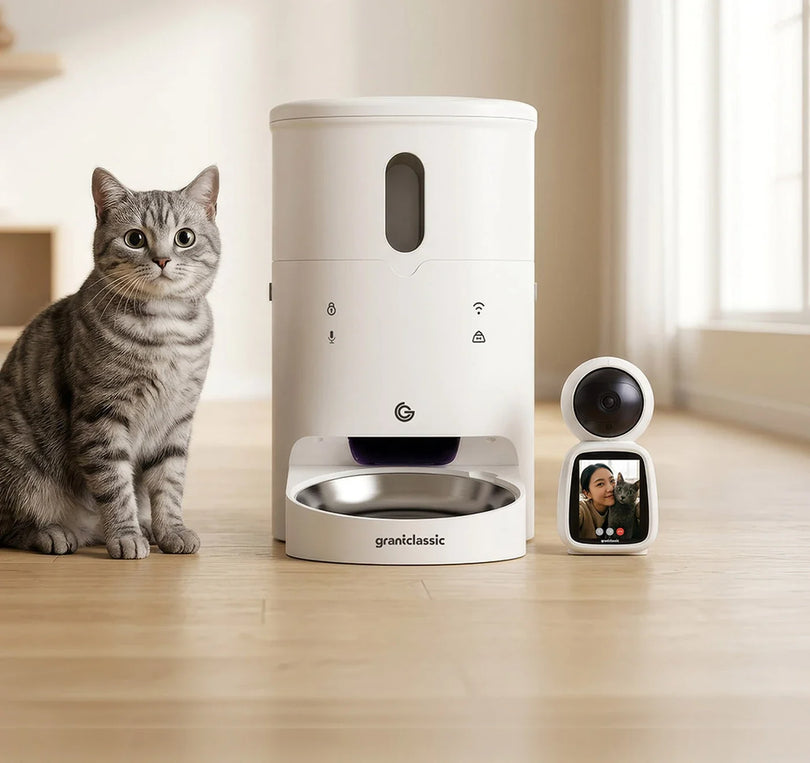
An automatic pet feeder is the modern answer to feeding. It dispenses food on a schedule you set in advance. These feeders usually combine a timer, a dispenser and a storage hopper to deliver measured portions. Some also let you adjust portion size and feeding times to suit an individual animal.
Convenience is the biggest advantage. You can set a feeding plan around your own schedule and your pet's dietary needs instead of serving every meal by hand. That matters most if you are often out or working long hours. Even when nobody is home, an automatic feeder serves meals at the times you set, so your pet gets the food it needs. It saves you time and effort, and it keeps meals consistent.
Beyond convenience, an automatic feeder helps control how much your pet eats and when. Because you can set both portion size and timing, it helps avoid overeating and skipped meals. That is especially useful for pets on a weight-management plan or with specific dietary needs.

There are trade-offs to consider. Automatic feeders need regular cleaning and maintenance to keep food hygienic and the mechanism working. Skip that, and you risk contaminated food or a jammed feeder. Some pets also want more interaction and human company than a machine can provide.
A manual feeder is the traditional option. You control the food yourself and serve it when your pet needs it. The main advantage is simplicity: you can adjust portions on the spot based on appetite and condition.
Feeding by hand also creates more moments together. You watch how your pet eats, which builds a closer connection and a better sense of how it is doing.
The downsides are real too. Manual feeding needs you to be there, so a long day away can mean a late meal. Portions can also be less precise, which matters for pets that need tightly controlled intake. And it takes time and attention that cannot be automated.
Taken together, both approaches have their place. Choosing the right one comes down to a few questions:
1. Your schedule and lifestyle: if you are often out or working long hours, an automatic feeder is usually the better fit, because it feeds your pet when you are not home. If you have time and flexibility, a manual feeder lets you be part of every meal.

2. Your pet's dietary needs: some pets need strict management, with measured portions on a fixed schedule. An automatic feeder handles that better and keeps the amount consistent. If your pet has no special requirements, a manual feeder is more flexible.

3. Cleaning and maintenance: an automatic feeder needs regular cleaning to keep food hygienic and the mechanism running. If you cannot keep up with that, a manual feeder is easier to manage.
The decision comes down to your lifestyle, your pet's needs and how much the interaction matters to you. An automatic feeder brings convenience and precise portion control, and it covers meals when you are away. It is a practical solution for busy owners and for pets that need measured feeding. What it cannot offer is the contact that comes with feeding by hand.
A manual feeder gives you those moments. You serve the meal, watch how your pet eats, and build a closer relationship. It suits owners with time who enjoy that part of the day. The catch is that it needs you to be present, and it cannot be automated.
Whichever you choose, the point is that your pet is fed properly. Keep an eye on weight and eating habits, and adjust portions and frequency as needed. And in either case, keep the feeder clean to avoid contaminated food and the health problems that follow.
In short, automatic and manual feeders each have strengths and limits. The right choice depends on your schedule, your pet's needs and how much you value the interaction. Either way, what matters is that your pet gets the care and the diet it needs.
Further reading: if you decide on an automatic feeder, the grantclassic LuxNourish automatic feeder supports scheduled, measured meals from the app and works for both cats and dogs, which makes it a solid place to start.


