



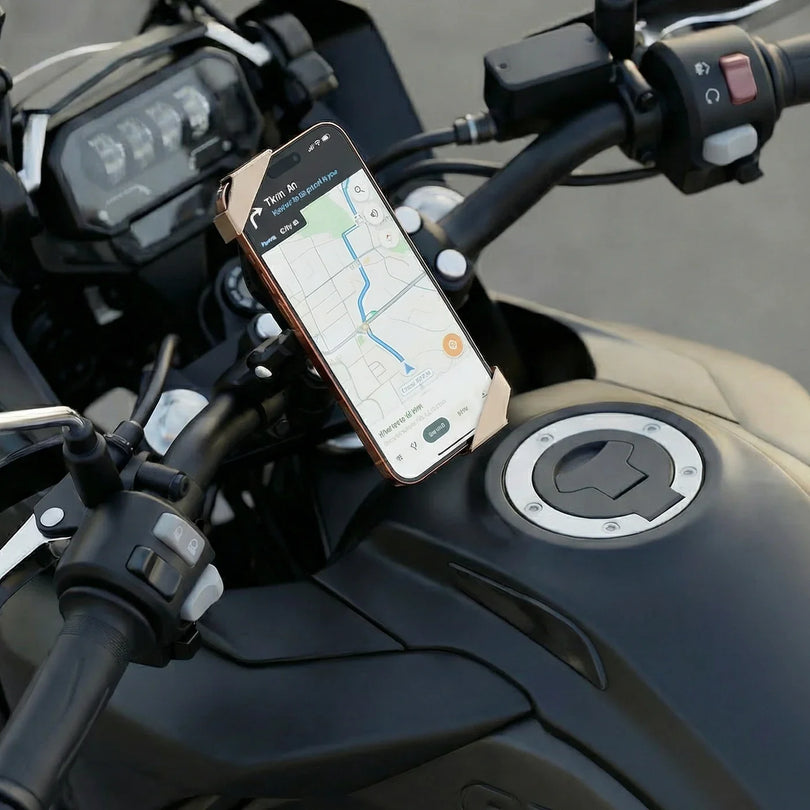

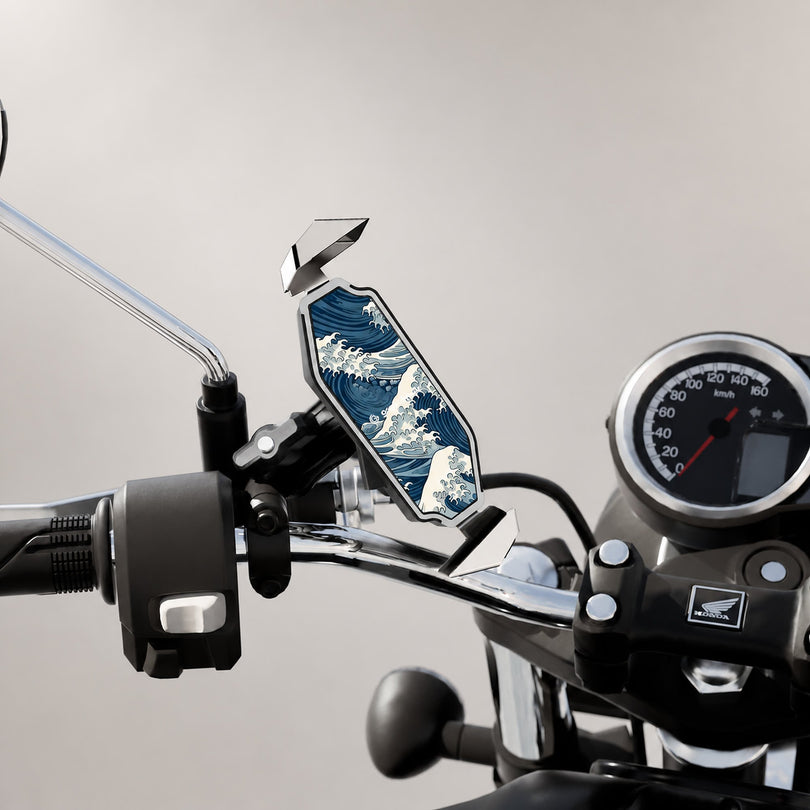

The wrong motorcycle phone mount means a shaky navigation screen, awkward handling, and on rough roads, a real chance of the phone coming loose.
Looks and price are not enough to go on. You also have to think about how you ride, how the mount attaches, how it handles vibration, how easy it is to use, and whether you want tracking or charging built in. This guide starts from the two most common needs, commuting and long-distance riding, and helps you narrow down the right mount quickly.
Start with how you actually ride
Commuters and long-distance riders do not want quite the same thing from a mount, so start by being honest about your typical ride.
If you mostly commute or deliver, and the phone comes on and off all day, prioritize one-handed operation, one-touch locking, and quick release. When you are getting on and off several times a day, easy handling beats extra features.
If you ride long distances, take mountain roads, or hit rough pavement, put more weight on clamping stability, damping structure, and material strength, so the phone is less likely to work loose under sustained vibration.
If you navigate for hours at a stretch, look further into viewing angle, charging, and how the wiring installs. If you park in complicated places and want to keep tabs on the bike, look for a model with a tracker bay and a locking, anti-theft design.
Put simply: commuters should look at handling first, long-distance riders at holding power. Settle your main use case first, then compare specs. It is a much faster route to the right mount.

Mounting: pick the base that fits your bike and the spot you want
How steady a mount feels is not only about the mount itself. The base matters just as much. Different bikes offer different mounting points, so check your bike's structure and the spot you plan to use before you choose a base.
grantclassic currently offers four base types:
- Stem cap ball mount
- Triple clamp mount
- Mirror bar clamp
- Heavy-duty clamp
Each base fits specific points on the bike, and the ball joint lets you set the viewing angle to your riding position. It also makes it easy to add phone clamps, navigation arms, and other accessories.
The product page lists the common motorcycle models each base fits, but structures and available space vary from bike to bike. Confirm which base type applies before buying, so you do not end up unable to mount it, blocking the instrument cluster, or interfering with the controls. See the motorcycle phone mount bases

For commuters: one-touch locking and one-handed use
A commuter may take the phone in and out several times a day, so how easily the mount works has a direct effect on the experience.
The Dualfind Motorcycle Phone Mount uses a one-touch locking design: drop the phone in and it locks, and you can take it out one-handed. It suits daily commuting, delivery work, and any ride with frequent stops.
Beyond the handling, it has a four-axis damping structure that absorbs some of the vibration from city potholes, manhole covers, and uneven pavement, which keeps the navigation screen steadier.
Best for:
- One-touch locking
- One-handed operation
- Four-axis damping
- City commuting and frequent phone handling

For long rides and rough roads: holding power, damping, and tracking
For long hours in the saddle or rough pavement, check first that the phone clamp holds firmly, that the mount has a damping structure, and that the frame material can take sustained use.
The Dualfind Pro Motorcycle Phone Mount, Tracker Edition adds a dual locking mechanism and a hidden tracker bay on top of one-touch operation and four-axis damping. The tracker sits inside the phone mount rather than hanging off the outside of the bike, which looks cleaner and makes the tracker harder to spot or remove.
The tracker edition comes in iPhone and Android versions. Once paired, iPhone owners can check the location in the built-in Find My app, and Android owners in Find My Device. If you forget where you parked, leave the bike in a large lot, or find it somewhere unexpected, you can pull up the last reported location on your phone's map.
Tracking works through the iOS or Android device-finding network, and how fast a location updates depends on nearby devices, the network, and your surroundings. It is best used to keep track of where you parked and to help you find the bike.
Along with tracking, Dualfind Pro has dual locking and four-axis damping to reduce the chance of the phone working loose on rough roads. With its high-strength frame, it suits riders who do long distances, face changing road conditions, or park in complicated places.
Best for:
- Four-axis damping that absorbs part of the road vibration
- A dual mechanism that clamps and then locks
- High-strength frame structure
- A hidden tracker bay that keeps the look clean
- iPhone and Android tracker versions
- Checking your bike's location from your phone

5 things to check before you buy
Work through these in order:
-
Does the base fit your bike
Check the mounting point, hole spacing, and ball size first, so it is not unusable when it arrives. -
Does it fit your phone
Account for case thickness and camera bump, not just the phone's own dimensions. -
Is the holding structure stable
For mountain roads and rough pavement, look for multi-point holding or a positive locking function. -
Does it have damping
A damping structure reduces how much road vibration reaches the phone and keeps the navigation screen steadier. -
Do you need tracking
If knowing where the bike is parked matters to you, choose a model with a tracker.
FAQ
Do I have to use the manufacturer's specified base?
Not necessarily. As long as the base's mounting point, hole spacing, ball size, and load rating are compatible with your bike and the mount, it will usually work. Check the product listing or ask your installer before buying.
Can commuters and long-distance riders use the same mount?
They can, but they should weigh different things. Commuters care more about quick handling and one-handed use; long-distance riders should prioritize holding stability, damping, and durability.
Do wireless charging mounts affect phone reception or navigation?
Installed and used normally, the things to weigh are mount position, power stability, phone compatibility, and heat. If location tracking seems unsteady after installation, adjust the phone's angle and mounting position first, and rule out environmental factors such as tunnels, tall buildings, or mountains.
Does damping really make a difference?
Yes. How much depends on the structure, the mounting position, base stability, the bike's own vibration, and the road. A four-axis damping structure absorbs part of the road vibration, but it only works properly when the mount is installed correctly.
Can a beginner install a motorcycle phone mount?
For mounts that need no wiring, yes, as long as the position and specs are right and you follow the instructions. If the job involves removing the triple clamp, wiring power, or a wireless charging module, have a professional do it.
In closing: match the use case first, then compare features
No single spec suits every rider. For daily commuting, favor one-touch locking and one-handed operation. For long distances and rough roads, put more weight on damping, clamping, and structural stability. If you navigate for hours, then consider wireless charging. If knowing where the bike is parked matters, choose a model with a tracker bay.
Confirm your bike, how you ride, and the features you actually need, and you will end up with a motorcycle phone mount that is convenient, steady, and built to last.
 OctaStand Motorcycle Phone MountEight-arm grip, tool-free install, steady t...
View product
OctaStand Motorcycle Phone MountEight-arm grip, tool-free install, steady t...
View product


