





"Can anyone recommend a good power bank?" It is the most-asked question in every gadget group. Choosing one is simpler than it looks if you follow the order: check the real capacity, confirm the safety, then match it to how you use it. Five minutes is enough to steer clear of inflated numbers, overheating and a dud. Here are the five steps.
1. Look at real capacity, not just the mAh number

Most people compare mAh, but that number can mislead. What matters is Wh (watt-hours) and how much energy actually comes out:
- The formula: Wh = mAh / 1000 x 3.7V. A common 20,000 mAh pack is about 74 Wh.
- Conversion loss: stepping the cell's 3.7V up to the 5V or 9V a phone wants costs roughly 20% to 30% of the energy. So a 20,000 mAh pack realistically fills an iPhone about three times. Claims of "charges your phone five times" are usually padded.
- Read the label: a brand willing to print the Wh rating and cell specs usually has tighter quality control too. If they will not even print the Wh, treat that as a question mark.
In one line: honest labeling and real components are what make a pack last.
2. Safety is the floor: certification, protection circuits and cell technology

All the capacity in the world counts for nothing if the pack fails. Three things to check:
- Certification: look for a recognized safety mark with a traceable certification number printed on the product or its packaging. In Taiwan that is the BSMI mark and its inspection number, which is the legal minimum for sale there. Whatever the market, a pack with no traceable certification is not worth the risk.
- Protection circuits: the spec sheet should spell out protection against overcharge, over-discharge, short circuit, over-temperature and overcurrent. All five, not a subset.
- Cell technology: a traditional lithium-polymer cell that shorts internally can go into thermal runaway and catch fire. Newer solid-state and semi-solid-state cells use an electrolyte that is far less likely to leak and holds up better under heat, which is the safer direction. For the differences, see our breakdown of how solid-state power banks resist fire, and how to pick a capacity, and how they hold up under nail penetration testing and PSE certification.
Lithium-polymer vs. solid-state: what actually differs
| Comparison | Traditional lithium-polymer | Solid-state / semi-solid-state |
|---|---|---|
| Electrolyte | Liquid, can leak | Gel or solid, far less prone to leaking |
| Thermal stability | Lower; crushing can short it and start a fire | Higher; less likely to enter thermal runaway when damaged |
| Cold weather | Noticeable capacity drop in winter | More stable, though still affected |
| Size and weight | Thicker at the same capacity | Can be made thinner |
| Price | More affordable | Higher, but the safety premium is worth it |
(For why cold weather drains a pack, see why power banks lose charge in winter.)
3. Why does it get hot and run out so fast?
Complaints about packs that run hot and fall short of their rated life usually trace back to cell quality:
- Cheap recycled cells have high internal resistance. They heat up while charging, energy turns into waste heat, and efficiency suffers.
- Heat then accelerates cell aging, which creates the loop: the more you use it, the hotter it runs, and the hotter it runs, the faster it wears out.
The fix is steps one and two: A-grade cells, a design that manages heat, and more stable cell technology. Power banks also have a lifespan, and after a few hundred charge cycles it is time to replace one. Details are in our guide to power bank lifespan and care.
4. Match features to how you use it, and skip specs you will not touch
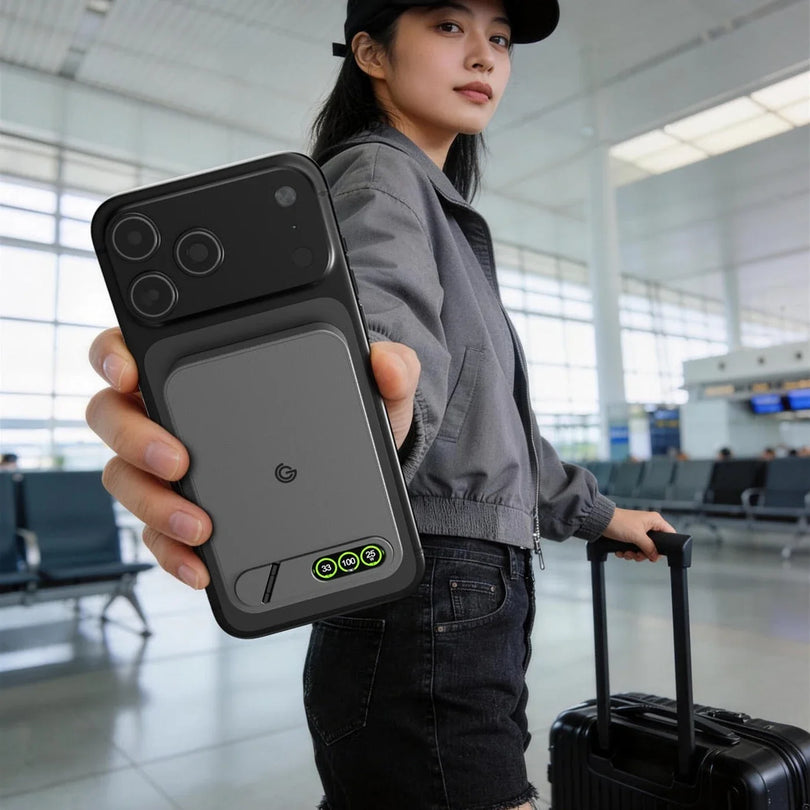
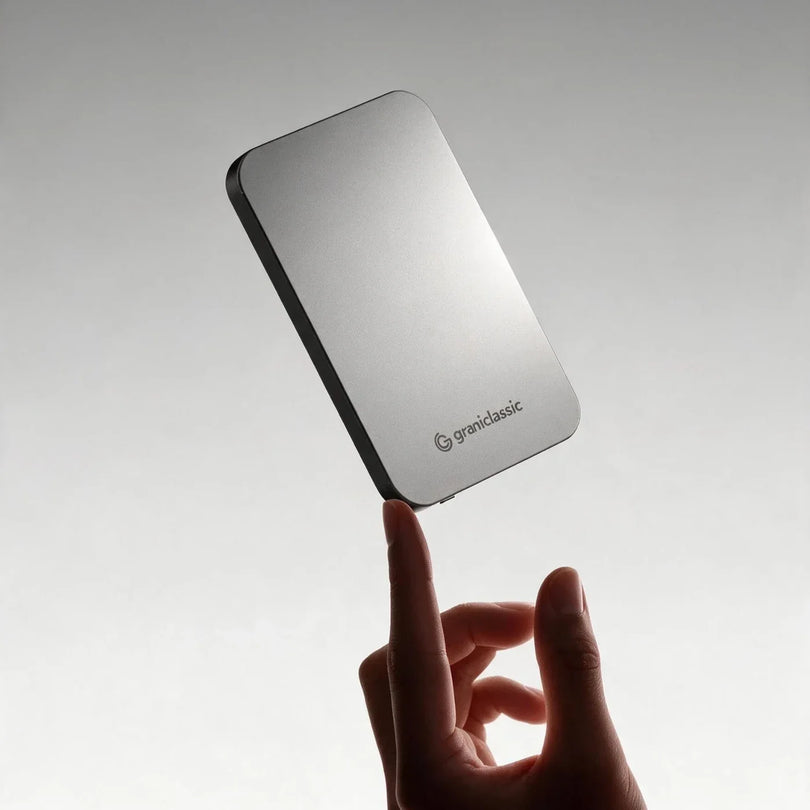
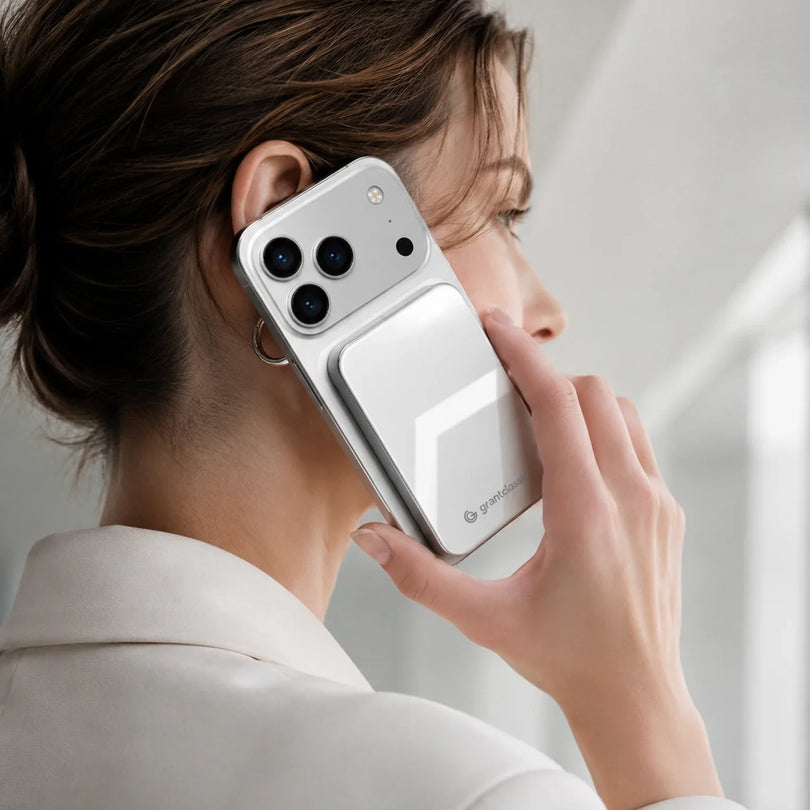
- Commuting and streaming: weight and size come first, and 10,000 mAh hits the sweet spot. Magnetic wireless plus a built-in cable saves the most hassle, since you stop carrying a bundle of cords. A slim solid-state pack with a Qi2.2 wireless fast-charging pad right on top slips easily into a small bag.
- Heavy use and full days out: go for 20,000 mAh with PD fast charging, and check the output wattage. For a laptop you want 65W or more. If you want the capacity and the safety, look at the 10,000 mAh solid-state pack.
- Several devices: charging a phone, a watch and earbuds together calls for two or more ports and enough total output.
- Wireless charging speed matters to you: look for Qi2 or Qi2.2. The compatibility and speed differences are covered in what to look for in a Qi2 power bank.
Features that fit your day are more useful than chasing the biggest capacity.
5. Flying? Check the rules first
Power banks go in your carry-on, never in checked baggage, and airlines judge them by watt-hours, not mAh. In the US, the FAA and TSA allow spare lithium batteries in carry-on only: up to 100 Wh without approval, 100 to 160 Wh with airline approval, and nothing above 160 Wh. Check before you fly so you are not stopped at the gate. Our full breakdown is in the rules on taking a power bank on a plane.
Frequently asked questions
Q1: How many times will 20,000 mAh charge a phone?
After roughly 20% to 30% conversion loss, expect about three full charges of a mainstream phone, not the five that some listings claim.
Q2: Are solid-state power banks really safer?
Solid-state and semi-solid-state electrolytes are far less prone to leaking and hold up better under heat, so they are less likely to go into thermal runaway when crushed or punctured than traditional liquid lithium cells. Still check for recognized certification and a full set of protection circuits.
Q3: Is it normal for a power bank to get warm?
Mild warmth during fast charging is normal. If it gets too hot to hold, or the shell starts to bulge, that usually points to cell quality or an internal fault. Stop using it right away.
Q4: Is magnetic wireless charging slower?
Wireless always loses some energy, but a pack that meets Qi2.2 (up to 25W) balances speed and convenience well enough for everyday use.
The short version
Keep the order in mind: check real capacity in Wh, confirm the certification and protection circuits and favor safer solid-state technology, match it to how you actually use it, and check the flight rules before you travel. Put safety ahead of the spec sheet and you end up with more than a brick that holds a charge. You get something that lasts for years, which is what we mean by a classic experience that keeps you powered on the road.
 TITANSHIELD Pro 10000 mAh Solid-State Power BankSolid-state cell, 25W wireless fast chargin...
View product
TITANSHIELD Pro 10000 mAh Solid-State Power BankSolid-state cell, 25W wireless fast chargin...
View product


