




You see a power bank in a store labeled "Qi2," with "MagSafe compatible" printed next to it, and you cannot tell whether those are the same thing or two different specs, or whether your phone will even work with it. So you buy a cable instead and go home.
Since Qi2 arrived in 2023, it has reshaped the wireless charging power bank market. It took the 15W wireless charging speed that only Apple's own MagSafe could deliver and turned it into an open standard available to every brand. This article breaks down what Qi2 is, how it differs from older Qi, whether Android can use it, and the spec checklist to run through before buying a Qi2 power bank.
How is Qi2 different from ordinary wireless charging?
The first open wireless charging standard was called Qi (pronounced "chee"), defined by the Wireless Power Consortium (WPC) and widely adopted from around 2012. The earliest version of Qi could only deliver 5W. iPhone later pushed Qi charging to 7.5W in software, while Android makers used proprietary protocols to reach 15W, 30W, and beyond. Those higher speeds were brand-specific fast wireless charging, not part of the Qi standard itself.
What Qi2 changed: in early 2023, the WPC announced Qi2 at CES, and Apple did something unusual by contributing MagSafe's magnetic alignment technology to the WPC as the core of the Qi2 design.
The two biggest differences between Qi2 and Qi 1.x:
1. Magnetic alignment: a Qi2 charger, including the charging face of a power bank, has a built-in magnet array that pulls the phone into the optimal charging position. Older Qi depended on how accurately you placed the phone. Set it down slightly off center and charging power dropped. Qi2 locks position magnetically, so the coils line up however you put it down.
2. Standard 15W speed: Qi2 specifies 15W charging in the standard itself, with no proprietary protocol required from the manufacturer. A Qi2-certified charger or power bank paired with a Qi2-certified phone gets 15W wireless charging regardless of brand.
The point of Qi2 is that MagSafe's magnetic alignment and 15W charging became an open standard anyone can build on. Buy a Qi2 power bank and there is no iPhone version and Android version to choose between. If the device supports Qi2, the speed and the convenience come with it.
Which phones suit a Qi2 power bank? Does Android work?

Qi2 compatibility comes down to the phone's own hardware, specifically whether there is a magnet array in the body, because Qi2's magnetic alignment needs matching magnets on the phone side to work fully.
iPhone:
- iPhone 13 series and later, including Pro and Pro Max: built-in MagSafe magnet array, fully Qi2 compatible, up to 15W.
- iPhone 12 series: has MagSafe magnets and is compatible, though some models accept slightly less power because of battery capacity.
- iPhone 11 and earlier: no Qi2 magnetic alignment, but backward compatible with standard Qi at up to 7.5W (or 5W on the earliest models).
Android:
Qi2 is not iPhone-only, but Android makers have adopted it at very different speeds. Whether an Android phone supports Qi2 should be confirmed against the manufacturer's official specification and WPC certification data. Plenty of Android phones support wireless charging without supporting Qi2 magnetic alignment, and if the phone has no magnets of its own, it generally needs a magnetic case. Actual charging power can also vary with the phone's specification.
More Qi2-compatible Android models keep arriving. Before buying, check the phone's official spec sheet for Qi2 specifically rather than settling for "supports wireless charging," which usually means basic 5W Qi.
What if my phone is not Qi2 compatible?
Qi2 is backward compatible with the Qi standard. If your phone does not support Qi2, setting it on a Qi2 power bank still charges wirelessly. The speed automatically steps down to Qi rates, typically 5W to 10W, without damaging the device or failing to charge.
How much slower is wireless than wired?
The answer is closer than most people expect. Under Qi2, the gap is small.
Take the TITANSHIELD Solid-State Power Bank as an example:
- Wired USB-C PD: 20W output
- Wireless Qi2: 15W output
A 5W difference. In practical terms, taking an iPhone 15 Pro (3,274 mAh) from 20% to 80%:
- Wired at 20W: about 45 minutes
- Wireless Qi2 at 15W: about 60 minutes
A gap of roughly 15 minutes. If you set the phone down and are not waiting to grab it, those 15 minutes are close to invisible.
Where Qi2 fits best:
- On a desk while you work, charging and using the phone at the same time
- Inside a bag, where the phone does not have to occupy a cable port
- Overnight, so it is full when you pick it up in the morning
Where wired still wins:
- You leave in 30 minutes and need a fast top-up
- Your phone has no Qi2 magnets and can only fall back to basic Qi, where 5W is too slow
- You need to charge two devices quickly at once
A well-designed Qi2 power bank can run wireless and wired at the same time: one device on the charging face, another on USB-C, both drawing power, with the actual split adjusted automatically by device and charge state. TITANSHIELD supports that simultaneous output mode.
Which specs matter when buying a Qi2 power bank?

Not everything on the market labeled Qi2 is the same. A few specifications are worth confirming:
1. Qi2 certified, not just "Qi2 compatible"
Qi2 certified means the product passed official WPC testing and can deliver 15W. Some manufacturers write "compatible with Qi2" without certification, and actual output may be only 7.5W. In that case "supports Qi2" means "nothing breaks when you set it down," not a speed claim. How to check: look up the WPC certified product database, or confirm the Qi2 logo on the packaging.
TITANSHIELD Pro, for instance, appears in the official WPC certification database under QI-ID 27410. You can view the full certificate at https://jpsapi.wirelesspowerconsortium.com/products/qi/27410, which is the most direct way to separate a genuinely Qi2.2-certified product from one that only claims compatibility.
2. Battery capacity and real conversion efficiency
The mAh figure on a power bank is cell capacity. How much of it reaches your phone depends on wireless charging efficiency, which for Qi2 runs about 85% to 90% in a good design and can be 70% to 75% in lower-end products. When comparing:
- 5,000 mAh: roughly one full charge for an iPhone 15 Pro, losses included
- 10,000 mAh: roughly two charges, plus a top-up for AirPods
3. Magnet strength
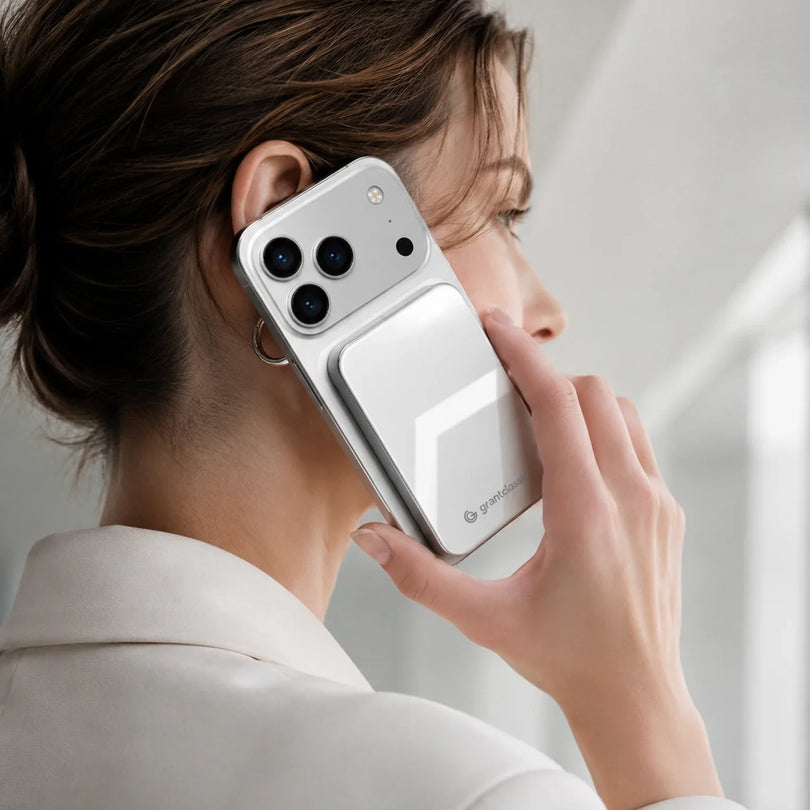
Qi2 magnet strength shapes the experience. Too weak and the power bank slides off the back of the phone when you walk or turn, interrupting charging. Favor models with real user feedback rather than marketing images alone.
4. Whether wireless and wired can output at once
On some Qi2 power banks, the USB-C port slows down or stops entirely while wireless charging is active. Check before buying whether the pack can run USB-C wired and Qi2 wireless output together. Dual output means one less thing to manage when traveling.
5. Thermal design
At 15W, both the coil and the cell generate heat. A good design routes that heat through the back panel, or limits charging efficiency to protect itself. A poorly designed product can get uncomfortably warm, and more seriously, that heat shortens cell life.
For more technical background on choosing a power bank, see our breakdown of wound versus stacked solid-state cell structures. Different cell structures behave fundamentally differently under high-power output and heat management.
Is wireless charging harder on the battery?
This one has been misunderstood for a long time.
The claim that wireless charging is harder on a battery is half right:
What damages a battery is temperature, not the charging method itself. Wireless charging does produce more waste heat than wired charging, because electromagnetic induction cannot convert energy without loss, so the phone's cell runs warmer while charging. Sustained heat over time is what shortens lifespan.
But the effect is overstated, for a few reasons:
1. Modern phones manage charging temperature: iPhone and most flagship Android phones automatically limit speed past 80% to avoid heating the cell while topping off. iOS also has Optimized Battery Charging, which studies your habits and avoids leaving the phone at 100% for long stretches.
2. Qi2's magnetic alignment removes misalignment losses: with older Qi, an off-center phone turned a lot of energy into waste heat instead of charge. Qi2's precise magnetic alignment makes the transfer more efficient, so it actually produces less waste heat than older Qi.
3. A good power bank manages heat too: TITANSHIELD uses solid-state cells, and solid electrolyte is more heat-tolerant and thermally stable than liquid lithium chemistry, so even as the cell warms during wireless charging, it stays safer than a conventional liquid cell. For more on solid-state safety, see how to choose a solid-state power bank.
Practical advice: if your habit is to leave the phone charging overnight and pick it up in the morning, a Qi2 power bank plus your phone's optimized charging makes very little difference against wired charging. There is no need to give up the convenience over it.
Using TITANSHIELD with Qi2 wireless charging
TITANSHIELD Solid-State Power Bank holds official WPC Qi2.2 certification (QI-ID 27410, part number 2601-PA16), with 15W wireless output and 20W USB-C PD wired output that can run at the same time. Here is how that plays out in a few situations.
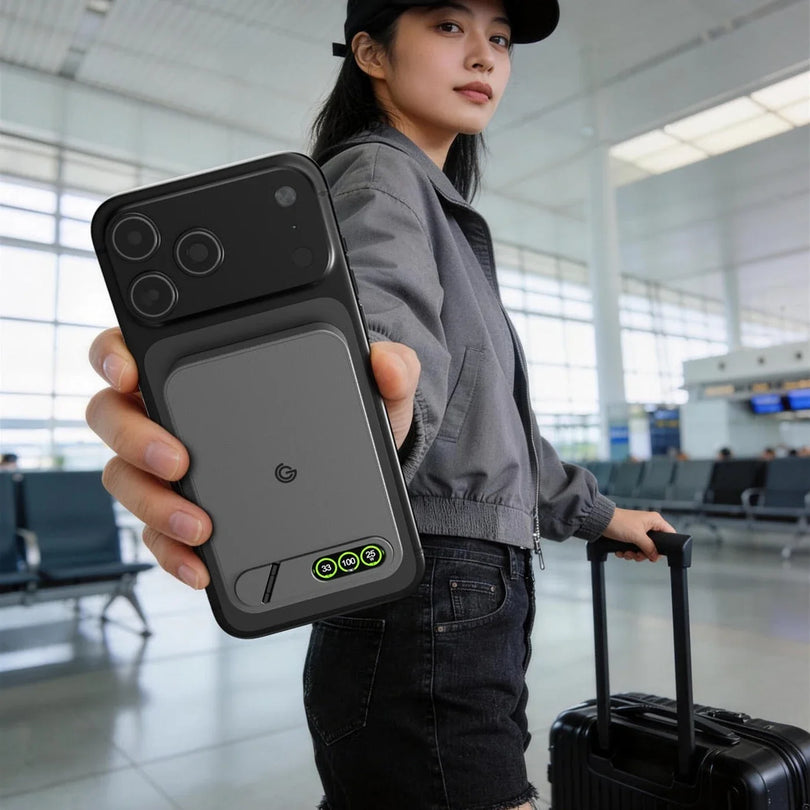
Business travel: the 5,000 mAh version is light and meets carry-on rules. Drop it in a bag with the Qi2 magnets holding it to the back of your phone and it stays put while you walk. On the plane, charge and use the phone at once. At the hotel, charge the phone wirelessly while the USB-C port feeds your laptop, so one pack covers two needs.
Daily commuting: a typical commute runs 20 to 40 minutes, and 15W of Qi2 adds roughly 15% to 20% in that window. Set it in a bag with no cable to find or unplug, which suits the stop-and-start rhythm of a commute better than wired. Note that a case thicker than 3 mm (0.12 in), or one without MagSafe magnets, will affect both magnet strength and charging efficiency.
Long days out: the 10,000 mAh version holds enough to fill an iPhone 15 Pro twice, and adding Qi wireless charging for AirPods still leaves you with a full day away from an outlet. Keep flight rules in mind as well: 10,000 mAh (37 Wh) is below the 100 Wh threshold, so it is fine in carry-on.
When using a case: Qi2 magnets are sensitive to case material. Leather cases and cases with metal plates interfere with the magnets or block the wireless signal. Choose a case designed with MagSafe magnet alignment, or a thin silicone case with no metal, to keep Qi2 alignment working as intended.
Qi2 vs standard Qi vs MagSafe at a glance
| Spec | Standard Qi | MagSafe (Apple only) | Qi2 |
|---|---|---|---|
| Top speed | 5-15W (proprietary per brand) | 15W (iPhone 12 and later) | 15W (all Qi2 devices) |
| Magnetic alignment | No | Yes (Apple ecosystem) | Yes (open standard) |
| Android compatible | Yes | No (iPhone only) | Yes (Qi2-certified Android) |
| Availability | Wide | Needs Apple-certified accessories | Wide (WPC certified) |
| Backward compatibility | - | Steps down to Qi | Steps down to Qi |
Put simply: MagSafe belongs to Apple and works with iPhone. Qi2 takes what MagSafe does, magnetic alignment plus 15W, and opens it to everyone. If you have an iPhone 12 or later, or a Qi2-compatible Android phone, a Qi2 power bank is a meaningful step up from an older Qi pad.
Choosing a Qi2 power bank is really choosing to carry MagSafe convenience with you. No cable to find, no plug to fit, set it down and it charges. Added up across daily commutes, that is one less thing to think about every day.
FAQ
Can Qi2 and MagSafe chargers be used interchangeably?
A Qi2 charger, including a Qi2 power bank, can charge a MagSafe phone (iPhone 12 and later) at 15W, the same as an official MagSafe charger. Going the other way, an official Apple MagSafe charger only works with iPhone and cannot reach 15W on a Qi2 Android phone. In short, Qi2 is the more widely compatible standard, MagSafe is the name inside Apple's ecosystem, and the underlying technology is the same. The difference is who can use it.
Can I use my phone while a power bank charges it wirelessly?
Yes, with two things to keep in mind. First, when a Qi2 power bank is charging a phone while also being charged itself, its own level drops more slowly. If the input through USB-C is larger than the wireless output, the pack is actually gaining charge. Which way it goes depends on which power figure is higher. Second, stacking charging like that for long stretches heats both devices, so doing one job at a time, either filling the power bank or charging the phone, is more efficient and runs cooler.
How do I know the phone is properly connected to a Qi2 power bank?
Qi2's magnets provide their own visual and tactile feedback. When the magnets line up there is a clear snap, and the phone shows the wireless charging animation on the lock screen. If there is no magnetic snap, or no charging icon, a case is usually blocking the magnets (metal or too thick), or the phone does not support Qi2. Try removing the case and setting the phone directly on the pack to tell which it is.
grantclassic, built for the experience.
 TITANSHIELD Pro 10000 mAh Solid-State Power BankSolid-state cell, 25W wireless fast chargin...
View product
TITANSHIELD Pro 10000 mAh Solid-State Power BankSolid-state cell, 25W wireless fast chargin...
View product


