





Can You Fly with a Solid-State Power Bank? The 2026 Rules Explained
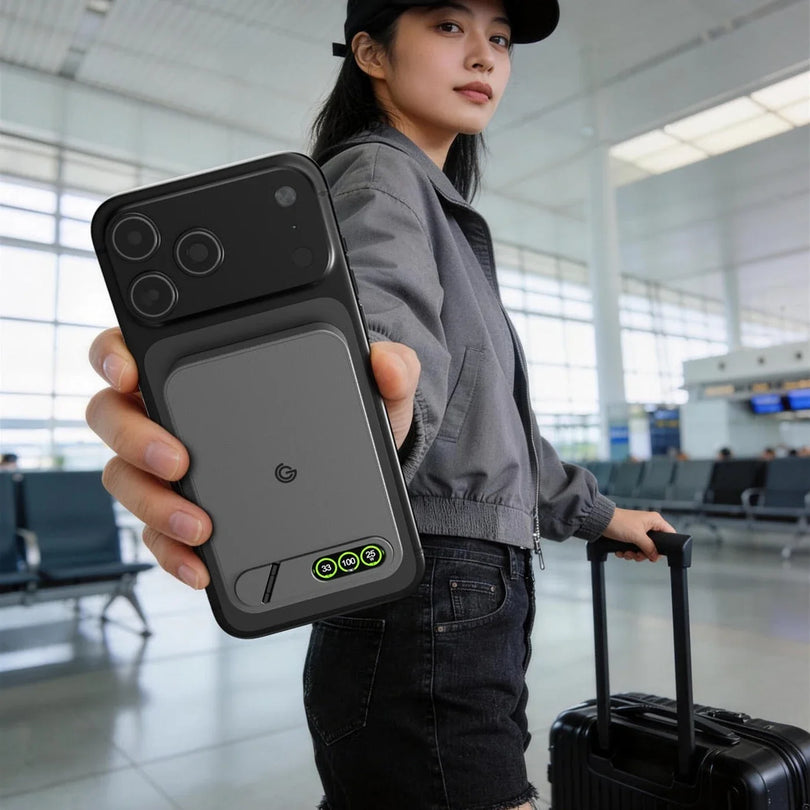
A screener picking your power bank out of your bag and turning it over is a more common sight from 2026 onward. On March 27, the 36 council members of ICAO (the International Civil Aviation Organization) adopted the first global standard for carrying power banks on aircraft, applying across its 193 member states. From April 24, flights to Japan add seven stricter rules on top. The short answer first: a solid-state power bank under 100 Wh can fly with you in the cabin, up to two units per person, in carry-on only, and you cannot charge anything with it in flight. On a Japan route, even a small pack counts toward that limit of two.
What US travelers need to know first: the FAA and TSA rules
Before the 2026 changes, start with the baseline that applies to every flight you take in and out of the US. Under FAA and TSA rules, power banks and spare lithium batteries go in carry-on baggage only, never in checked bags. Capacity decides the rest:
- 100 Wh or less: no approval needed. This covers essentially every consumer power bank.
- 100 to 160 Wh: allowed with airline approval, arranged before you fly.
- Over 160 Wh: not allowed on a passenger aircraft at all.
If your pack is a normal 5,000 to 20,000 mAh phone charger, you are in the first tier and there is nothing to file. The rules that trip people up are the newer ones about how many you carry and how they are packed.
What the 2026 ICAO standard changed
You can still bring one. The rules just changed on March 27, 2026. This is the first time ICAO has set a single global standard specifically for power banks. Until now, every country and airline wrote its own, and the results did not line up. The 36 ICAO council members adopted the standard unanimously, and it applies across 193 member states.
Why now? Because of the incident numbers. According to FAA figures, as of June 2025 there had been 38 lithium battery incidents on passenger aircraft in the US alone, most of them power banks overheating, smoking or catching fire inside a sealed cabin. That is why the new rules single out power banks rather than electronics in general.
The standard comes down to four points:
- Capacity tiers. Under 100 Wh, carry freely. 100 to 160 Wh, airline approval required in advance. Over 160 Wh, banned outright.
- Unit limit. For power banks under 160 Wh, two per person.
- Carry-on only, no checked bags. Power banks and spare lithium batteries cannot go in checked luggage.
- No charging in flight. You cannot use a power bank to charge another device, and you cannot charge the power bank itself from a seat outlet or USB port.
Crew carrying and using power banks for operational reasons are exempt.
The reasoning connects back to the solid-state topic itself. Most lithium battery fires start with thermal runaway, and once that happens in a cargo hold, crew have almost no way to reach it. In the cabin, in a carry-on, somebody can act immediately. A cell's own thermal stability, the difference between solid-state, semi-solid-state and a conventional liquid electrolyte, does not exempt you from any of these rules, but it does lower the risk if something ever goes wrong. We cover that in more depth in How to choose a solid-state power bank: safety and capacity.

Flying to Japan? Seven extra rules from April 24
If Japan is your destination, another layer applies from April 24, 2026, stricter than the global ICAO standard. Four of these seven carry over from existing practice; three are new:
- Two units, regardless of capacity. Previously there was no unit limit below 100 Wh. Now the cap is two per person no matter how small each one is.
- Capacity markings must be legible. The Wh or mAh printed on the power bank has to be readable, and an unreadable one can be pulled aside.
- Carry-on only, never checked. Same as the ICAO standard.
- Not in the overhead bin. Keep it on you or under the seat in front of you.
- No charging the power bank from aircraft power. Neither an AC outlet nor a USB port under the seat.
- No charging other devices from the power bank. To charge a phone in flight, plug into the seat's own outlet or USB port instead.
- Insulate the contacts. Tape over the output ports, or store it in a dedicated case or a zip bag, kept away from keys, coins and other metal that could short it.
Rules 1 and 7 get overlooked most often, and they are the two that stop people at screening. Rule 1 in particular means small does not mean free: a slim 5,000 mAh pack still counts, and going over two means choosing what to leave behind.

How to calculate Wh: the mAh conversion and a capacity table
Wh (watt-hours) is the unit the rules use. mAh (milliamp-hours) is the one printed on the box. The conversion is:
Wh = mAh / 1000 x nominal cell voltage (V)
Lithium cells inside power banks are usually rated at 3.7V, which simplifies to Wh = mAh / 1000 x 3.7. Common capacities work out like this:
| Rated capacity | Watt-hours | Rule that applies |
|---|---|---|
| 5,000 mAh | About 18.5 Wh | Under 100 Wh, carry freely |
| 10,000 mAh | About 37 Wh | Under 100 Wh, carry freely |
| 20,000 mAh | About 74 Wh | Under 100 Wh, carry freely |
| 27,000 mAh | About 99.9 Wh | Right at the 100 Wh line, confirm before you leave |
| About 43,000 mAh and up | Over 160 Wh | Not allowed on board |
The table makes the point: nearly every consumer power bank sits under 100 Wh, and the packs that actually cross the 160 Wh line are high-capacity battery kits for professional camera gear. What catches ordinary travelers is the unit count and the markings, not the capacity.
Which one should you pack? TITANSHIELD 5,000 vs 10,000
Applied to TITANSHIELD: the 5,000 mAh model is marked 19 Wh on its Japanese PSE listing, and the 10,000 mAh model is 38.5 Wh (PSE certificate numbers WTF25X10284942 and WTF25X10284943). Both sit far below the 100 Wh threshold, so neither needs a declaration or airline approval, and neither is something you have to explain at the checkpoint.
So which one? Think in terms of the two-unit cap:
- Short business trips, two or three days away. One 10,000 mAh pack is enough, roughly two to three full phone charges. Add a cable and you have a complete backup, with your second slot still free for something like an earbud case.
- Longer trips with several devices. A 10,000 mAh as the main pack plus a 5,000 mAh backup. Two units, well under the limits, and plenty of capacity.
- Packing as light as possible. Just the 5,000 mAh. Light enough to forget in a jacket pocket, enough for an emergency, and the simplest thing to carry through screening.
What a solid-state or semi-solid-state electrolyte really buys you here is not about whether it can board. Bags get compressed and sit for hours in wide temperature swings, and TITANSHIELD's design goal, power without fire, targets exactly the crushing and heat-soak scenarios that cause trouble in transit. That ties into whether a cell is wound or stacked: a stacked structure heats more evenly under uneven pressure, which is the approach TITANSHIELD uses. TITANSHIELD also holds Japanese PSE certification (certificates WTF25X10284942 and WTF25X10284943) and China CCC certification against GB 31241-2022, the mobile power safety standard (5,000 mAh certificate 2025100914641049), and meets the BSMI requirements for sale in Taiwan, so the safety claims have been through third-party testing.
How to pack so you are not stopped: a pre-flight checklist
Everything above, in the order you would actually do it:
- Count them. All power banks together, whatever the capacity, no more than two. Spares count.
- Check the markings. The Wh or mAh figure on the box or the body needs to be legible. If it has worn off, add a label before you go.
- Everything in carry-on. Power banks and spare lithium batteries never go in a checked bag.
- Insulate the contacts. Tape over the USB output or use a separate pouch, and keep them away from keys and coins.
- Keep it within reach on board. Seat pocket or personal bag, not the overhead bin.
- Do not charge in flight. If your phone is low, use the seat's outlet or USB port and let the power bank rest until you land.
The same checklist works for Japan and for most other routes. Japan's rules are the strictest, so packing to them covers you nearly everywhere.
FAQ
Do solid-state and semi-solid-state power banks follow the same flight rules?
Yes. ICAO and national rules classify by lithium battery capacity in watt-hours, not by whether the electrolyte is liquid, semi-solid or solid. Capacity limits, unit caps and the carry-on requirement are identical. The difference is a lower thermal runaway risk if something does go wrong, and that does not exempt you from anything.
My power bank only lists mAh, not Wh. What do I do?
Convert it yourself: Wh = mAh / 1000 x 3.7. So 10,000 mAh is about 37 Wh. If there is no capacity marking at all, add a label with the converted Wh figure before you travel, so a screener is not left asking.
Can an older power bank with no Wh marking still fly?
In principle yes, as long as its actual capacity is under 100 Wh. But legible markings are an explicit requirement of Japan's 2026 rules. If the label on an older pack has rubbed off, work out the Wh yourself and add a waterproof label to the body, so unclear markings do not turn into extra questions at screening.
Can I split them up, the power bank in carry-on and the cable in checked baggage?
The power bank itself, meaning anything with a lithium cell inside, must stay in carry-on for the whole trip. Plain cables and adapters have no cell and no such restriction, so pack those wherever they fit. The pack itself never rides in checked baggage.
On a connecting flight, whose rules apply: origin, destination or transit point?
In practice, pack to the strictest rule on the whole itinerary. On a US to Japan trip, pack to Japan's seven rules for the entire journey, even though the departure leg is looser, because transit and arrival can still be judged by local rules. Packing to the strictest standard saves you from rearranging a bag at a gate.
Is charging a phone from a power bank in flight really off limits?
Yes. The 2026 rules explicitly prohibit using a power bank to charge any device in flight, and prohibit charging the power bank from aircraft power. If you need power on board, use the seat's USB port or outlet and save the power bank for after you land.
Sort out the power bank before you go
This wave of 2026 rules is a response to something obvious: a power bank is now standard travel gear for almost everyone, and the more lithium cells there are in a cabin, the higher the risk. The global ICAO standard plus Japan's stricter version look like a lot of rules, but they reduce to four things. No more than two. Markings legible. On you the whole way. No charging in the air.
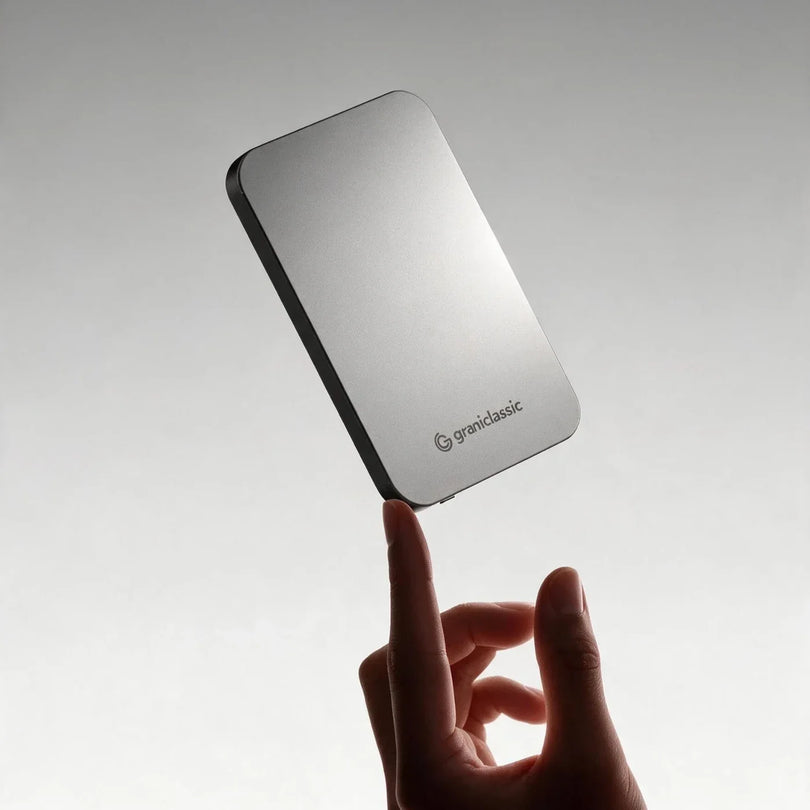
Pick a pack under 100 Wh, clearly marked, with a cell you trust, and packing gets simpler. Both grantclassic TITANSHIELD solid-state power banks, 5,000 mAh and 10,000 mAh, sit well under the 100 Wh threshold, and the stacked solid-state and semi-solid-state structure holds up better to the crushing and heat inside a packed bag. For full specs and how to pick a capacity, go back to the complete solid-state power bank guide, or browse the full TITANSHIELD lineup.
grantclassic. Power without fire.
 TITANSHIELD Pro 10000 mAh Solid-State Power BankSolid-state cell, 25W wireless fast chargin...
View product
TITANSHIELD Pro 10000 mAh Solid-State Power BankSolid-state cell, 25W wireless fast chargin...
View product


